REVIEW · ROME
Vespa Sidecar Tour: Rome by Night
Book on Viator →Operated by Luxurbe · Bookable on Viator
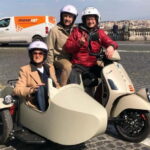
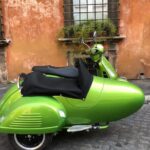
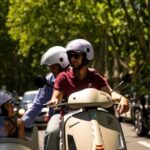
Rome looks different when you ride at night. The big appeal here is that you get to enjoy Rome’s landmarks with your driver handling the traffic, so you can focus on photos and atmosphere instead of street navigation on busy roads—on a Vespa sidecar route built for the evening. I also like the small group setup (no bigger than nine), which keeps it more personal than the big bus-style crowding.
The main consideration is time: with only about 3 hours, each stop is short, so this is best for seeing and photographing the sights rather than doing long, inside visits. If you’re hoping for extended time at one or two monuments, you’ll probably want to pair this with a separate daytime plan.
In This Review
- Key Highlights You’ll Feel Fast
- Vespa Sidecar at Night: Why This Rome Route Works
- Price and Value: What $131.04 Buys You in 3 Hours
- Starting at Piazza del Popolo: The Meeting Point You’ll Want to Find Early
- Hotel Pickup and Mobile Tickets: Simple Logistics That Save Headaches
- Safety and Comfort on a Vespa Sidecar: Helmets and a Driver Who Handles the Mess
- Night Sights in Sequence: Piazza del Popolo to Trevi Fountain
- Pantheon Stop: The Dome’s Oculus Trick at Night
- Piazza Navona and Piazza Venezia: Two Square Moods in One Ride
- Colosseum at Night: Big, Bright, and Surprisingly Emotional
- Jewish Ghetto Stop and What to Look For
- Gianicolo Hill Panoramas and the Noon Cannon Detail
- St. Peter’s Square: Bernini’s Embrace Meets the Egyptian Obelisk
- Trastevere After Dark: Cobblestones, Alleys, and Local Pace
- Who This Vespa Sidecar Tour Fits Best
- Should You Book This Vespa Sidecar Tour?
- FAQ
- How long is the Vespa Sidecar Tour: Rome by Night?
- Where does the tour start and end?
- Is hotel pickup available?
- What group size should I expect?
- Is the tour offered in English?
- Are helmets included?
- Do I need admission tickets for the stops?
- Is food included?
- Does the tour include audio guides?
- What is the cancellation policy?
Key Highlights You’ll Feel Fast
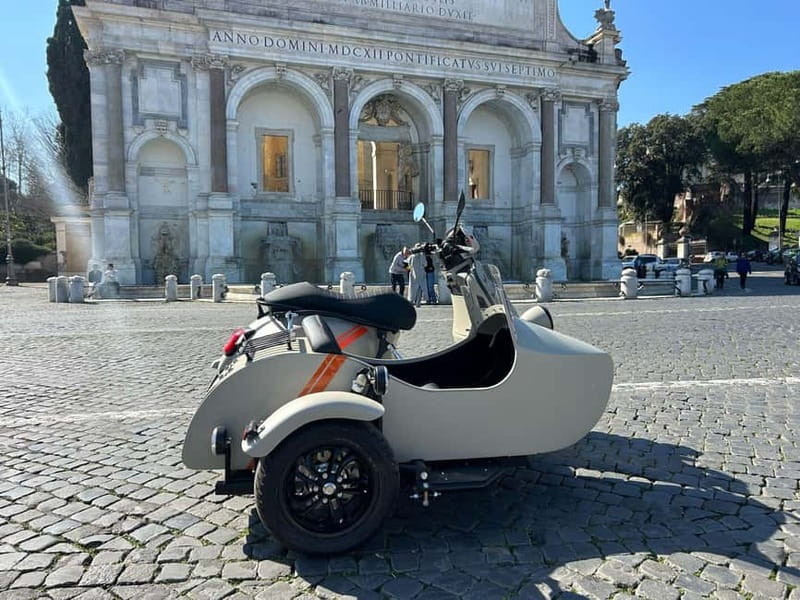
- Driver handles the traffic: you sightsee while someone else threads the streets
- Up to nine people: small enough for a more personal experience
- Hotel pickup option: wait outside at street level, then roll out on time
- Certified helmets included: comfort and safety built into the ride
- Night photo stops at top landmarks: quick but well-targeted viewing moments
- English-speaking driver-guide: easy explanations during the ride
Vespa Sidecar at Night: Why This Rome Route Works
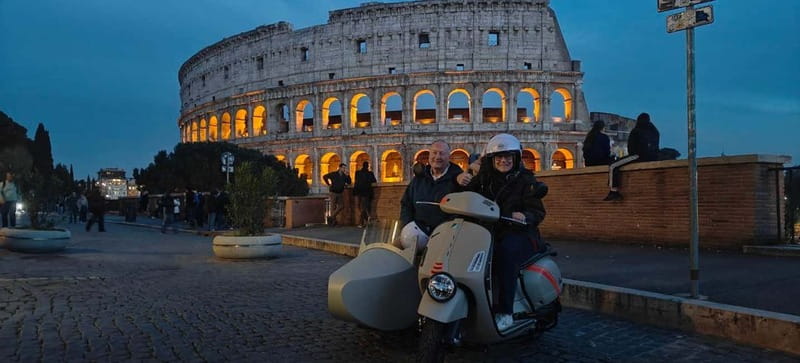
Rome’s night streets can be a lot—cars, scooters, crossings, and sudden turns. This tour solves the stress by putting you in passenger mode while your driver handles the driving. You’re still out in the open, still getting landmark-by-landmark views, but without the mental load of figuring out where you’re going every minute.
What makes this especially appealing is the mix of iconic targets and Rome’s neighborhoods in one loop. You’re not just doing the greatest hits; you also get a look at places like the Jewish Ghetto and Trastevere, which helps the night feel more like real city life than a checklist.
Price and Value: What $131.04 Buys You in 3 Hours
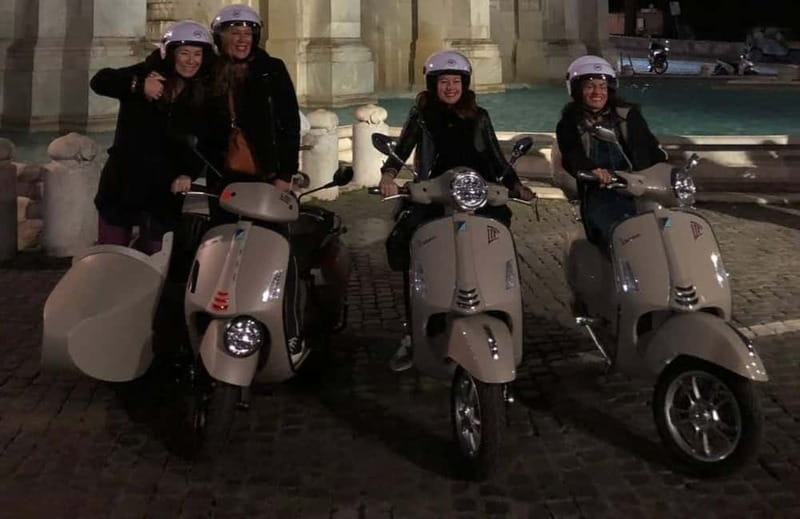
At about $131.04 per person for roughly 3 hours, the value comes from logistics, not just sightseeing. You’re paying for a guided ride, photo stops at major landmarks, and transportation in a way that’s hard to replicate on your own—especially after dark.
This price also lines up well with the group size. With a group capped at nine, the experience stays closer to “your ride with a guide” than “large group tour choreography.” Add in English guidance and included helmets, and you get a solid package where you’re not separately managing transport, meeting points between sights, or safety basics.
The tradeoff is that you’re moving quickly. Short stops mean you get “I saw it” moments more than “I’m going to spend an hour here” moments.
Starting at Piazza del Popolo: The Meeting Point You’ll Want to Find Early
The tour starts at Piazza del Popolo, 11, 00187 Roma RM. It ends back at the meeting point, so you’re not left wondering where the route finishes or how to connect to your next plan.
If you choose pickup, you’ll wait outside your hotel or accommodation at street level. The driver shows up at the scheduled time (with a 10-minute waiting window), and you’ll want to be visible and ready a few minutes early. This matters because Rome pickup delays are easy to create—one late person can throw off the whole departure rhythm.
I’d treat this like a “get there early, relax after” situation. Being on time gives you a smoother start and more time for the sights.
Hotel Pickup and Mobile Tickets: Simple Logistics That Save Headaches
The tour offers pickup (if selected), and you’re given a mobile ticket. That’s helpful because you’re not scrambling to print anything or hunt for paperwork once you’re in Rome.
You’re also near public transportation by the meeting area. So even if you’re not doing hotel pickup, you’ve got options to get to Piazza del Popolo without turning your evening into a complicated mission.
One more practical detail: the tour is listed as private for your group (only your group participates). That usually means less waiting around for strangers, which is a real advantage at night when everyone is trying to see and move quickly.
Safety and Comfort on a Vespa Sidecar: Helmets and a Driver Who Handles the Mess
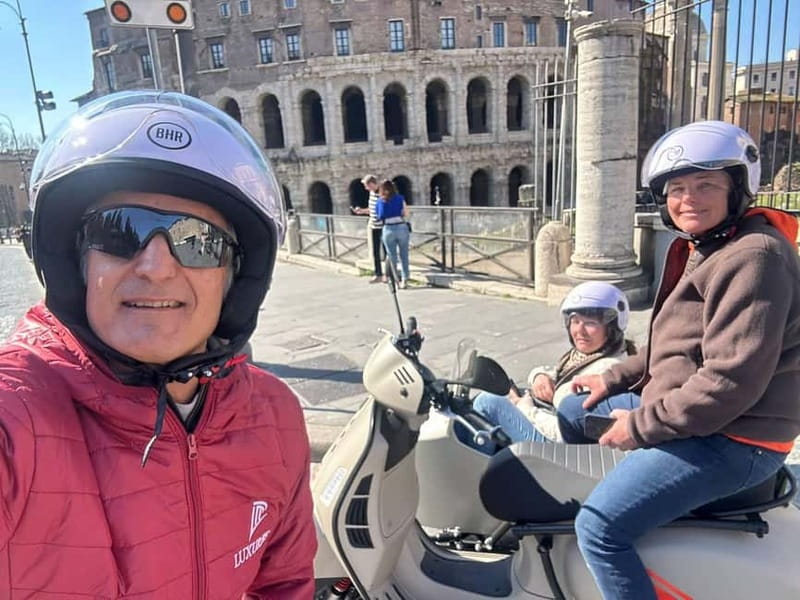
You get certified helmets, and that changes the whole feeling of the ride. You can relax more because the safety basics are provided, not something you have to figure out yourself.
The core benefit, though, is how the guide/driver approaches the streets. The tour is built around letting your driver handle Roman traffic so you can sightsee. That sounds like a small detail, but in Rome it’s the difference between enjoying the city and constantly scanning road flow.
If you’ve ever done a DIY scooter plan or followed directions on foot while cars blur past, you’ll appreciate this structure. It’s a “look outward” tour, not a “problem-solve the city” tour.
Night Sights in Sequence: Piazza del Popolo to Trevi Fountain
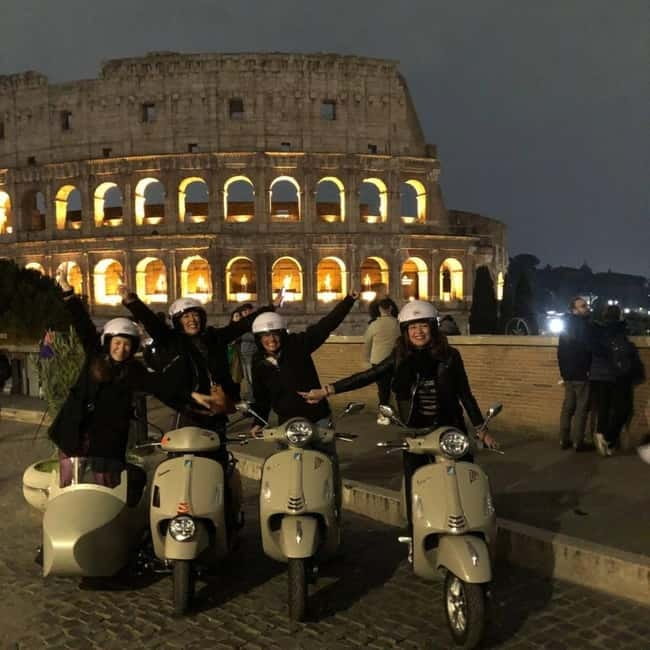
The route begins at Piazza del Popolo, historically a major entrance for travelers coming from the north. At the center is an Egyptian obelisk—about 3,000 years old—brought to Rome by Emperor Augustus. The square is framed by the twin churches of Santa Maria in Montesanto and Santa Maria dei Miracoli, which gives the area that classic sense of symmetry you’ll notice right away.
Overlooking it is Pincian Hill, and the night timing is good for that “watch the city spread out” feeling. Even with short stops, this is the kind of place where one quick pause helps you orient yourself.
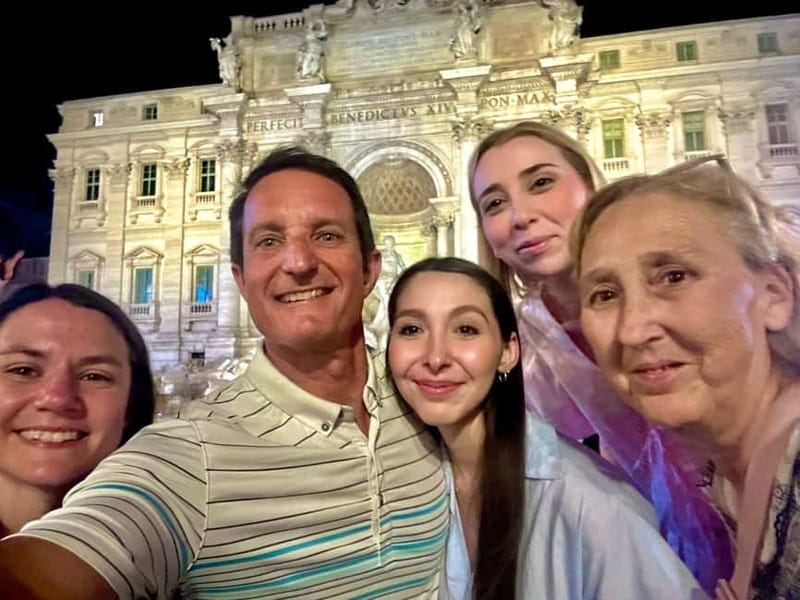
From there, you head to Trevi Fountain, Rome’s famous Baroque landmark designed by Nicola Salvi in the 18th century. The fountain features Oceanus riding a shell-shaped chariot pulled by sea horses. There’s also the coin tradition: toss a coin with your right hand over your left shoulder for a return to Rome. It’s one of those rituals that’s easy to see from the outside—especially when your schedule is tight.
Trevi is free to view (no entrance ticket required for the stop), but it can still be crowded. The quick timing works here: you get the iconic sight and photos without turning the evening into a long wait.
Pantheon Stop: The Dome’s Oculus Trick at Night
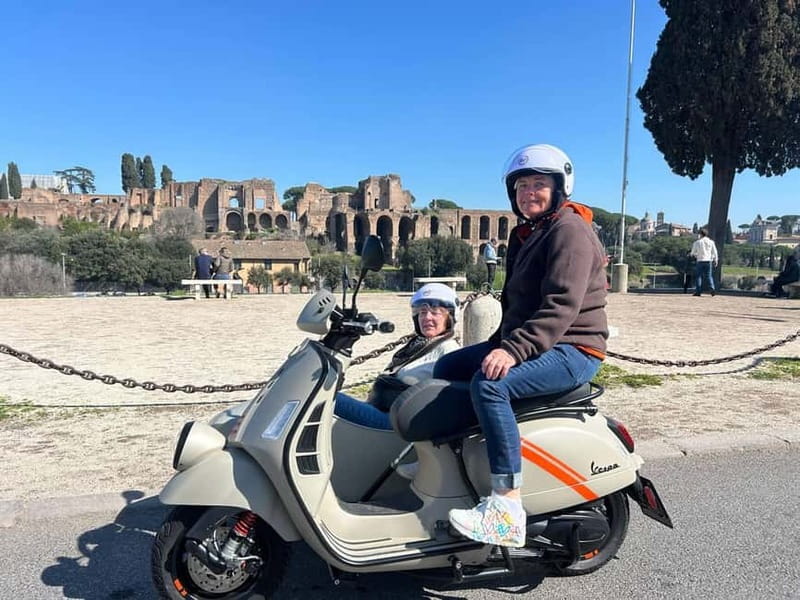
Next up is the Pantheon, one of the best-preserved monuments from ancient Rome. It started as a temple dedicated to all gods and later became a church. What makes it special is the massive dome—still considered the largest unreinforced concrete dome in the world—and the oculus at the center that lets natural light fall into the interior.
On a night ride, you may not get the same lighting effect inside as you would in the middle of the day, but the Pantheon’s presence still hits hard. It’s the kind of stop where even a brief pause gives you a sense of scale you can’t really fake with pictures alone.
Also, because this stop is ticket free on the tour listing, it fits well into a short evening plan.
Piazza Navona and Piazza Venezia: Two Square Moods in One Ride
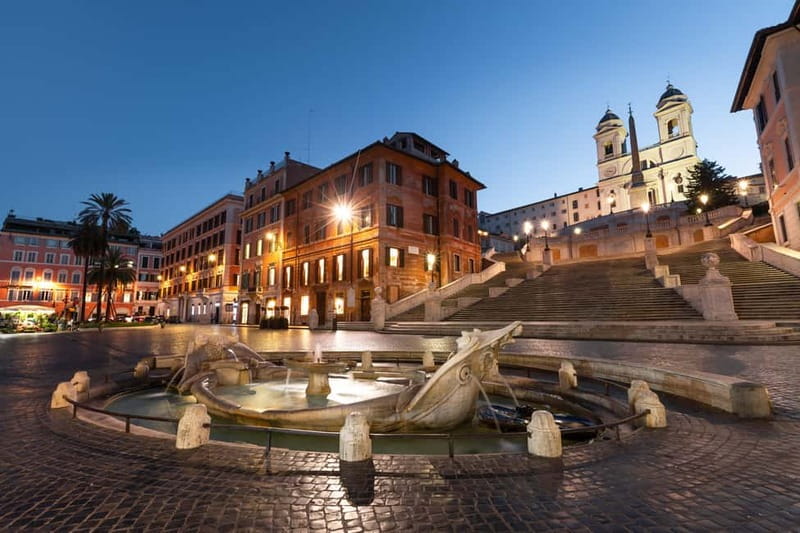
Piazza Navona is built on the ancient Stadium of Domitian, and that old-world layering shows in the shape of the square. It’s famous for its three fountains, including Bernini’s Fountain of the Four Rivers, which represents major rivers of the known continents in the 17th century. The surrounding buildings and cafés keep the area lively, so this stop tends to feel more like a real Roman hangout than a museum moment.
Then you move to Piazza Venezia, one of the busiest squares, where the grand Vittorio Emanuele II Monument dominates the view. It’s also known as the Altar of the Fatherland. Nearby is Palazzo Venezia, which was once a residence for popes and later became Mussolini’s headquarters during World War II. Even if you only get a short glance, this is one of the clearest places where modern Italy and Rome’s older layers share the same space.
These two stops are short, but they’re useful. Navona gives you energy; Venezia gives you context.
Colosseum at Night: Big, Bright, and Surprisingly Emotional
The Colosseum is the star of the ancient Rome lineup. Built in the 1st century AD, it was the largest amphitheater ever constructed, holding spectacles for more than 50,000 people. It’s famous for gladiator battles, animal hunts, and large public events.
Even with earthquakes and centuries of looting damage, the Colosseum still works as a “wow” moment. Night adds a different mood: the monument feels less like a daytime landmark you pass and more like a scene from Roman history.
This stop is about 10 minutes. That’s enough for photos and a guided orientation, but not enough for a full deep visit.
Jewish Ghetto Stop and What to Look For
Next is the Ghetto, a neighborhood known for deep Jewish heritage and visible history. You’ll pass through a place where you can still see ancient Roman ruins alongside traditional shops, plus the impressive synagogue.
This stop is a great example of why the ride is more than a monuments-only tour. It gives you a real sense of Rome as a living city, not just a series of big-ticket sights.
The timing is about 15 minutes, which helps. You’re not racing through it like a roadside photo. You get a chance to notice details in the streets and understand that history here isn’t just in buildings—it’s in the neighborhood.
Gianicolo Hill Panoramas and the Noon Cannon Detail
Colle del Gianicolo is one of Rome’s higher hills, and it’s known for top panoramic views. It’s also tied to the fight for Italian unification, with battles associated with Giuseppe Garibaldi.
One standout detail is a long-standing tradition: every day at noon, a cannon is fired from the hill. It was started in 1847 under Pope Pius IX to standardize the city’s clocks. Since you’re riding at night, you won’t catch the cannon, but the story gives the view extra meaning. You’re looking out from a point that once helped regulate daily life in Rome.
This stop is brief, but it’s one of the best places on the route for that “Rome spreads out forever” feeling.
St. Peter’s Square: Bernini’s Embrace Meets the Egyptian Obelisk
Then you roll into St. Peter’s Square, the heart of Vatican City. The space was designed by Gian Lorenzo Bernini, with the colonnades arranged in a semicircle that symbolizes the Church’s open arms. At the center stands an ancient Egyptian obelisk, flanked by fountains.
Even if you don’t go inside, the square’s composition is hard to miss, and the night setting makes it feel grand without being rushed.
The tour also mentions the way the square connects to St. Peter’s Basilica, which is world-famous for artworks including Michelangelo’s Pietà and a dome designed by Michelangelo. With only about 10 minutes here, you’re mostly taking in the exterior and the layout—but it’s still a memorable moment.
Trastevere After Dark: Cobblestones, Alleys, and Local Pace
To close the loop, you head to Trastevere, one of the most atmospheric Roman neighborhoods. This is where the tour shifts from landmark architecture to street-level romance: cobblestone streets, narrow alleys, and lively squares.
This stop is about 10 minutes, so it’s not a full neighborhood walk. Still, it’s long enough to catch the feel of the area—especially if you’re the type who likes wandering without a strict itinerary.
If you’ve only seen central Rome in daytime, Trastevere at night helps you understand how the city actually relaxes.
Who This Vespa Sidecar Tour Fits Best
This is a smart choice if you want Rome highlights fast, without renting a car or playing navigation chess in heavy traffic. It’s also a good fit for people who enjoy photo stops with guidance—especially at night, when the city can feel intense on foot.
Because the group is small (up to nine) and it’s offered in English, it’s also comfortable for families or mixed groups who want someone else to handle the route and timing.
If you’re the type who loves long museum time or deep interior visits at every stop, you’ll likely find the pacing too quick. Treat it as your night orientation and photo plan, then build on it during the day.
Should You Book This Vespa Sidecar Tour?
Book it if you want the best kind of Rome evening: landmark views, quick photo stops, and a driver who handles the traffic while you enjoy the scenery. The included helmets, small group size, and option for hotel pickup make it feel like a practical upgrade over wandering on your own.
Skip it (or pair it carefully) if you need lots of time inside monuments. This tour is designed for seeing a lot, not lingering.
If you like your Rome night with motion and good pacing, this Vespa sidecar ride is an easy yes.
FAQ
How long is the Vespa Sidecar Tour: Rome by Night?
It’s approximately 3 hours.
Where does the tour start and end?
It starts at Piazza del Popolo, 11, 00187 Roma RM, Italy, and ends back at the same meeting point.
Is hotel pickup available?
Yes, hotel pickup is offered if selected, with pickup at street level outside your accommodation. The driver arrives at the scheduled time or within a 10-minute waiting window.
What group size should I expect?
It’s described as a private tour/activity with a group size no bigger than nine.
Is the tour offered in English?
Yes, it is offered in English.
Are helmets included?
Yes, certified helmets are included.
Do I need admission tickets for the stops?
The tour lists admission ticket free for the stops included, but entrance tickets to monuments and attractions are listed as not included overall. So if you plan to enter any specific places, you may need to handle tickets separately.
Is food included?
No, food and drinks are not included.
Does the tour include audio guides?
Audio guides are provided upon request, if available.
What is the cancellation policy?
Free cancellation is available up to 24 hours in advance for a full refund. If you cancel less than 24 hours before the start time, the amount paid is not refunded.