REVIEW · ROME
Vespa Sidecar Tour: Highlights of Rome
Book on Viator →Operated by Luxurbe · Bookable on Viator
Rome is best when you move fast and think slow.
This Vespa sidecar tour strings together the big-name sights with just enough street-level time to get the idea of the city—history, monuments, and neighborhoods—without turning your day into a marathon of queues.
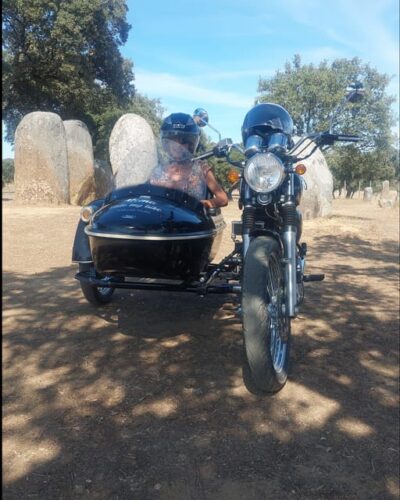
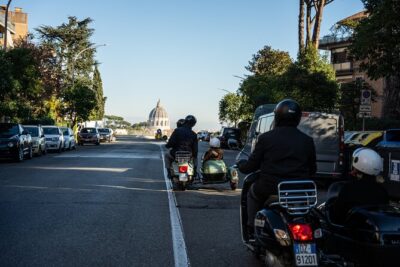
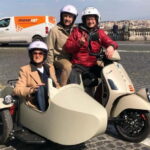
I like that you’re on a Vespa sidecar with an expert driver/guide doing the navigation and handling traffic. I also like the built-in earphones, which make the storytelling clear while you’re bouncing along Rome’s roads. One thing to consider: you need to feel comfortable holding on during the ride, and like any busy-city tour, timing can get affected by traffic.
In This Review
- Key Highlights You’ll Actually Feel on This Tour
- A Vespa Sidecar Way to See Rome Fast
- Price, Time, and Small-Group Comfort
- Starting at Piazza del Popolo: Obelisk, Symmetry, and Quick Orientation
- Trevi Fountain: The Coin Ritual With the Real Meaning
- Pantheon: The Oculus Light Trick You’ll Remember
- Piazza Navona to Vittorio Emanuele II: Art, Fountains, and a Roman Power Node
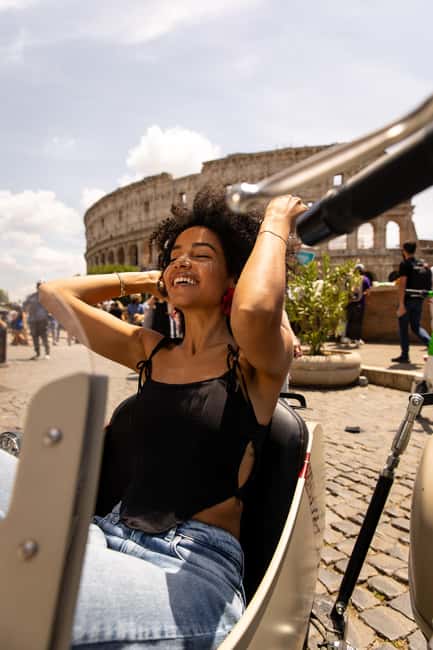
- Colosseum Photo Stop: Iconic, But Plan Your Expectations
- The Ghetto: Streets With Memory and a Synagogue-Spotting Moment
- Gianicolo Hill: Garibaldi’s Battles and the Noon Cannon
- Vatican City Area Time: St. Peter’s Basilica Without the Ticket
- Trastevere Ending: Cobblestones, Squares, and a More Local Rome
- Guide Quality: Why Earphones and Photo Stops Matter
- Safety and Comfort: Helmets, Holding On, and Being Realistic
- Should You Book This Vespa Sidecar Tour of Rome?
- FAQ
- How much does the Vespa Sidecar Tour: Highlights of Rome cost?
- How long is the tour?
- Is pickup available?
- What’s included in the tour?
- Which attractions require tickets?
- What weather does the tour require?
Key Highlights You’ll Actually Feel on This Tour
- A small maximum of 10 travelers, so the experience stays personal instead of chaotic
- Earphones included, so you hear the guide clearly even when you’re moving
- Helmet + insurance included, plus helmets certificates for extra peace of mind
- Photo stops at the iconic points, so you’re not constantly asking strangers to take pictures
- A route that mixes monuments and real neighborhoods, from the Jewish Ghetto to Trastevere
- Expert guide flexibility, with some stops adjustable to what you want to prioritize
A Vespa Sidecar Way to See Rome Fast
Rome can be overwhelming. One hill leads to another church leads to another piazza, and suddenly your “quick stop” becomes a two-hour side quest. This tour is designed to cut through that problem.
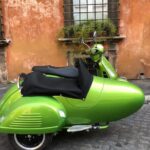
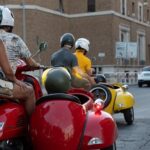
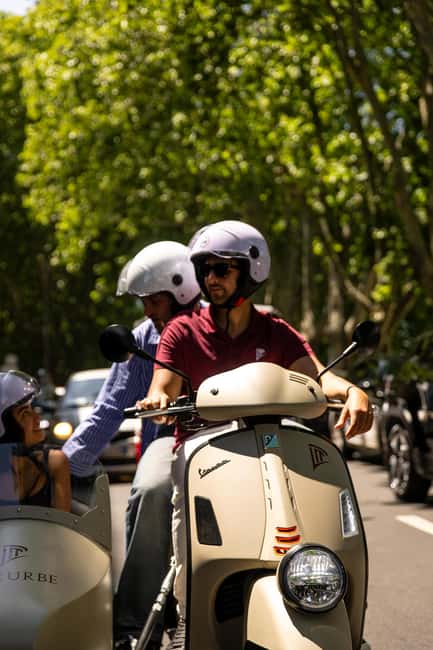
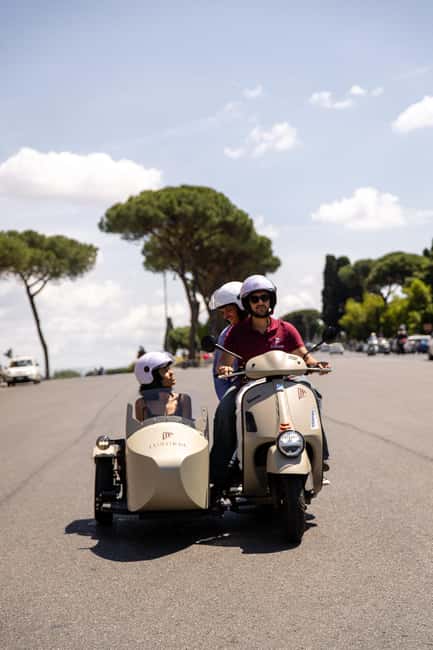
You ride in a sidecar setup while your expert driver handles the driving. That matters because Rome traffic is real, and parking is not a friendly hobby. With earphones, your guide can talk clearly as you pass landmarks and then stop briefly for photos and orientation.
You’re also not paying for a private session. At about $114.12 per person for roughly 3 hours, you get a lot of ground covered—plus the practical safety pieces (helmets, insurance, and driver-led control). The trade-off is that you’re moving. This isn’t a “linger in museums for hours” day.
Price, Time, and Small-Group Comfort
Let’s talk value in plain terms. You’re paying for:
- a guide/driver who knows the city,
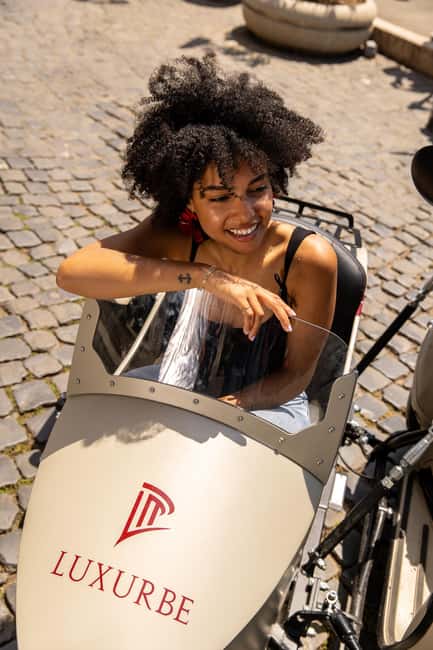
- a Vespa sidecar ride,
- safety gear,
- and access to the story behind the sights.
At 3 hours, the schedule is tight enough to hit major stops, but not so long that you feel trapped. The group limit of 10 travelers is a big part of why this works: you’re less likely to get stuck at the back of the line or wait while the group regroups.
Duration is listed as approx., and timing can shift if traffic gets messy. That’s the nature of Rome roads. If you have a dinner reservation or a hard deadline, give yourself breathing room.
Starting at Piazza del Popolo: Obelisk, Symmetry, and Quick Orientation
The tour begins at Piazza del Popolo, a powerful starting point because it gives you a sense of how Rome funnels people into the center. In the middle sits an ancient Egyptian obelisk, brought to Rome by Augustus. That one detail alone sets the theme: Rome loves to reuse, rebuild, and repurpose.
You’ll also see the twin churches—Santa Maria in Montesanto and Santa Maria dei Miracoli—framing the square in a striking symmetry. From above, the Pincio provides a panoramic view, which helps you understand the city’s layout fast.
This first stop is also practical. You’re fresh. Your driver is warming up. Your guide can explain the day’s route so you’re not just sightseeing—you’re collecting context.
Trevi Fountain: The Coin Ritual With the Real Meaning
Next comes Trevi Fountain, one of the world’s most photographed monuments—and also one of the most misunderstood ones if you only view it from Instagram distance.
This fountain is a Baroque masterpiece designed by Nicola Salvi in the 18th century. It shows Ocean on a shell-shaped cart, pulled by sea horses. The famous ritual matters too: the tradition says you throw a coin using your right hand over your left shoulder, and it’s supposed to ensure your return to Rome (with the everyday bonus that the money supports charitable works).
Your stop is short—about 10 minutes—but free. Use it for one thing: watch the details. Sea horses. Shell. The composition. Then snap your photo from a spot where you can still see the whole fountain instead of just the top third.
Pantheon: The Oculus Light Trick You’ll Remember
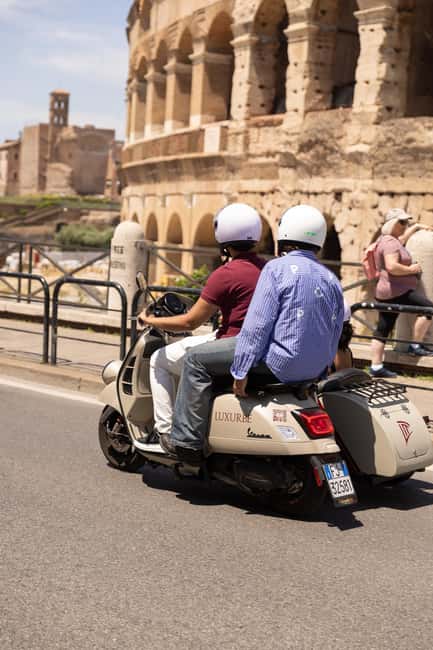
The Pantheon is the kind of stop that turns a busy day into a breath of calm. It’s among the best preserved ancient monuments in Rome, built on the idea of a temple dedicated to all gods. Today, it’s a church, which gives it that living, everyday atmosphere.
The headline feature is the dome. The roof is still astonishing because it’s a huge span built in unreinforced concrete. The opening in the center, the oculus, works like Rome’s own lighting system. Natural light pours in, and that light changes as the day moves.
Your time here is brief, so don’t try to “do everything.” You’ll get the effect even in a quick stop. Aim for one moment where the light hits the interior and you can actually see the space as a space.
Piazza Navona to Vittorio Emanuele II: Art, Fountains, and a Roman Power Node
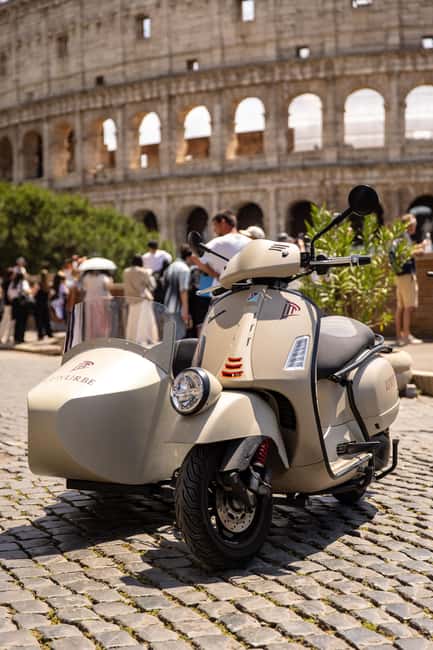
Piazza Navona is one of Rome’s most lively squares, built over the ancient Stadium of Domitian. Today it’s famous for its three fountains.
One of them is the Fountain of the Four Rivers by Gian Lorenzo Bernini. It represents the four major rivers known in the 17th century. This is where Rome’s artistry shows up as public sculpture—meant for crowds, not quiet museum rooms.
From there, you connect to another big statement: a major crossroads dominated by the Monument to Vittorio Emanuele II, often called the Altar of the Fatherland. The surrounding area also ties into modern and political Rome, including Palazzo Venezia, a papal residence that later became Mussolini’s headquarters during World War II.
This stretch helps you see Rome as layers, not as separate postcards. You’re moving from Baroque spectacle to national monument to modern political memory—fast, but meaningful.
Colosseum Photo Stop: Iconic, But Plan Your Expectations
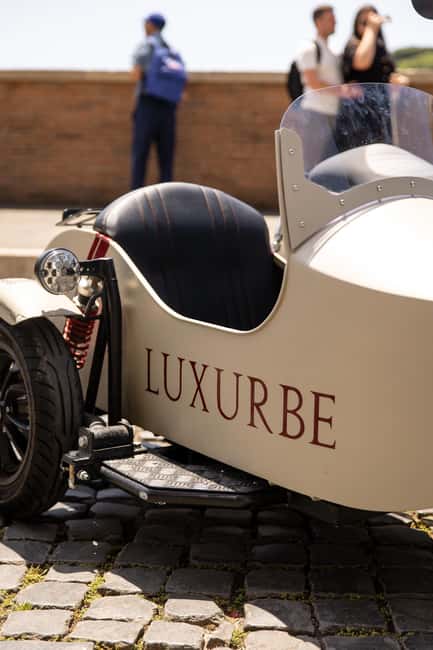
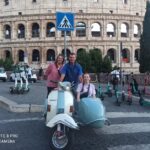
The Colosseum is the obvious headline, and for a good reason. Built in the 1st century AD, it was the Roman Empire’s largest amphitheater, holding over 50,000 spectators for gladiator fights, animal hunts, and public events.
Here’s the practical part: your stop is about 10 minutes, and admission tickets are not included. So what you’ll get is the exterior experience—an orientation moment and photo time—more than a deep inside-the-arena visit.
To make this stop count, think like this:
- Take one wide shot so you can remember the full scale.
- Then take one detail shot that shows how it sits in the surrounding city.
The Colosseum is damaged, repaired, and reinterpreted over time. Seeing it in the modern street grid is part of the lesson.
The Ghetto: Streets With Memory and a Synagogue-Spotting Moment
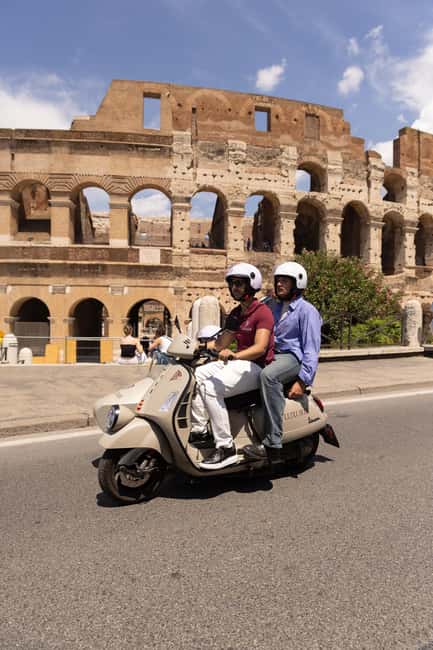
Then you head into the Ghetto area, known for history, culture, and a distinct neighborhood feel. You’ll get a short walk (about 15 minutes) through streets with traditional shops and visible layers of the ancient city.
The big anchor is the Synagogue, which helps you understand that this isn’t just an aesthetic detour. It’s a place where identity and community show up in the built environment.
Your stop here is free, and the value is the contrast. You just saw the grand empire stage. Now you’re seeing a neighborhood scale version of Rome—smaller streets, tighter feeling, and a more human pace.
Gianicolo Hill: Garibaldi’s Battles and the Noon Cannon
From monuments to viewpoints. Colle del Gianicolo is one of the best places to get your bearings, with wide city views.
It’s also historically tied to the Unification of Italy. The hill was part of the battles led by Giuseppe Garibaldi. Then there’s the daily ritual: since 1847, there’s a tradition at noon where a cannon fire marks the exact time for the whole city.
Your stop is about 10 minutes, and it’s free. If you can time it well, this is one of those moments that makes Rome feel like a living timetable rather than a static set of ruins.
Even if you miss the cannon by a few minutes, the viewpoint still does its job: it turns Rome from flat photos into a real city.
Vatican City Area Time: St. Peter’s Basilica Without the Ticket
You’ll reach Città del Vaticano with a focus on St. Peter’s Basilica. It’s the heart of the Catholic Church and a major Renaissance masterpiece. The area around it is also tied to art on a huge scale, including the Vatican Museums, but those museum entries are not included on this tour.
Admission is not included for this part, so expect a seeing-and-orienting experience rather than a full ticketed museum day.
This is still valuable. St. Peter’s is a visual shock in the best way. Even with a short stop, it helps you understand why so many people organize their trip around Vatican City as a central anchor point.
Trastevere Ending: Cobblestones, Squares, and a More Local Rome
You finish in Trastevere, one of Rome’s most authentic-feeling neighborhoods. Think cobbled streets, small alleys, and lively squares that feel less like a theme park.
Your stop is about 10 minutes, free. This timing works because you’re wrapping up with something that feels different from the grand set pieces. You get that sense of Rome as everyday life: walking around, pausing for a drink, noticing how locals move through the streets.
If you want to keep exploring after the tour, this is a good place to be. You’ll leave with the right neighborhood vibe to guide your next steps.
Guide Quality: Why Earphones and Photo Stops Matter
In my book, the biggest difference between a decent Rome tour and a great one is the guide’s ability to explain what you’re looking at in the time you have.
This tour comes with an expert driver/guide plus earphones, so you’re not stuck asking people to repeat themselves over engine noise and street chatter. You can actually follow the story while moving.
You also get photo stops built into the experience. That might sound small, but in Rome it’s huge. It means you’re less likely to waste time finding the perfect angle while your group waits.
And yes, guide style can vary by person. I’ve seen names like Matteo, Dan, Aiman, and other standout drivers like Daniel, Andrea, and Massimo associated with this experience, with praise often tied to humor, courtesy, and adapting stops to your interests. That’s the sort of energy you want for a short, intense day.
Safety and Comfort: Helmets, Holding On, and Being Realistic
Helmets are provided, and the tour includes insurance for passengers. Helmets certificates are included too, which is a nice extra layer of seriousness.
Still, sidecars come with one physical reality: you have to be able to hold on comfortably. One experience noted feeling unsafe because it was hard to hold onto something and that led to shortening the trip to avoid any major issue.
So here’s my practical advice:
- If you get shaky easily, ask yourself if you can stay relaxed while the ride moves.
- Wear clothes and shoes that let you brace your body without fuss.
- If you feel even slightly unsure at the start, speak up right away.
You’re riding for the sites, not proving toughness to yourself.
Should You Book This Vespa Sidecar Tour of Rome?
I’d recommend booking if you want a fast, fun way to hit major Rome landmarks and mix in real neighborhood flavor, all with small-group size, earphones, and photo stops. The route makes sense for a first or second visit, especially when you don’t want to spend a whole day tied to one museum.
Skip it or think carefully if:
- you strongly prefer ticketed museum time and long indoor visits (Colosseum and Vatican admissions are not included),
- you have a very rigid schedule and can’t tolerate timing shifts from traffic,
- or you’re uncomfortable with the physical aspect of riding and holding on.
If you fit the sweet spot, this is one of those days that leaves you with Rome in your eyes, not just on your phone.
FAQ
How much does the Vespa Sidecar Tour: Highlights of Rome cost?
The price is $114.12 per person.
How long is the tour?
The tour lasts about 3 hours.
Is pickup available?
Hotel pickup and drop-off are not included, but pickup is available on request with a supplement. If you’re not using pickup, you meet at Piazza del Popolo.
What’s included in the tour?
You get a Vespa sidecar tour with an expert driver/guide, earphones, helmets, photo stops at iconic points, insurance for passengers, and helmets certificates.
Which attractions require tickets?
Admission tickets are not included for the Colosseum and Città del Vaticano (including St. Peter’s Basilica/Vatican Museums area). Other listed stops show free admission.
What weather does the tour require?
The tour requires good weather. If it’s canceled due to poor weather, you’ll be offered a different date or a full refund.