REVIEW · ROME
Vespa Sidecar Tour : Express Highlights of Rome
Book on Viator →Operated by Luxurbe · Bookable on Viator
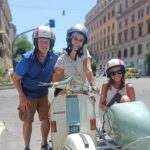
A Vespa sidecar turns Rome into a street-level show. In about 1 hour 30 minutes, you’re guided past some of the city’s biggest landmarks with live commentary that helps the scenes make sense, not just look pretty. And because this is a small-group format (up to 10 riders), the pace feels relaxed instead of rushed.
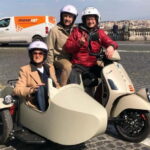
I especially love the “see Rome fast, without fatigue” setup. You get to hop from place to place quickly, yet still spend enough time at each stop for photos and a quick look around. I also like that safety isn’t a guessing game: you’ll be provided a certified helmet by the operator.
One possible drawback: audio. A few people noted that the narration can be hard to hear, so if you’re sensitive to sound mix, you may want to ask the guide about how audio will work for your seat.
In This Review
- Key Highlights You’ll Actually Feel
- Why This 90-Minute Vespa Plan Works in Rome
- Meeting at Piazza del Popolo: The Best Starting Point for a Roller-Coaster Route
- Piazza del Popolo and the Altar of the Fatherland Crossroads
- The Colosseum Zone: Seeing the Amphitheater Without the Museum Day
- Trevi Fountain and the Pantheon: Two Icons, Two Different Kinds of Wow
- St. Peter’s Square by Scooter: A Different Kind of Big
- Janiculum Hill: The Panoramic Payoff
- Guides Make or Break It: Luca, Massimo, Matt, Ernesto, Fabrizio, Roberto
- Safety, Sidecar Comfort, and How Seating Usually Works
- Value: What You’re Paying For at Around $60
- Making the Most of the Route on Your Day
- Should You Book This Vespa Sidecar Tour?
Key Highlights You’ll Actually Feel
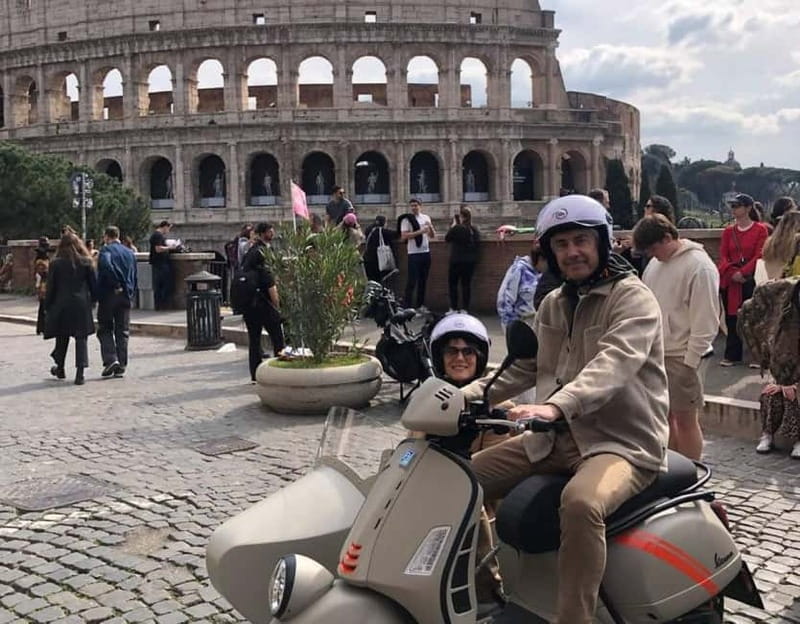
- Classic Vespa sidecar thrill: wind-in-your-face sightseeing with plenty of photo time
- Live commentary that adds context: you’re not just collecting landmarks, you’re getting the why
- Short stops at major exteriors: quick visits to Popolo, Colosseum area, Trevi, Pantheon, and Vatican Square
- Guides who feel local: names that come up often include Luca, Massimo, Matt, Ernesto, Fabrizio, and Roberto
- Safety gear provided: helmets are included so you don’t worry about the basics
- Plan for audio clarity: microphone/speaker volume has been an occasional complaint
Why This 90-Minute Vespa Plan Works in Rome
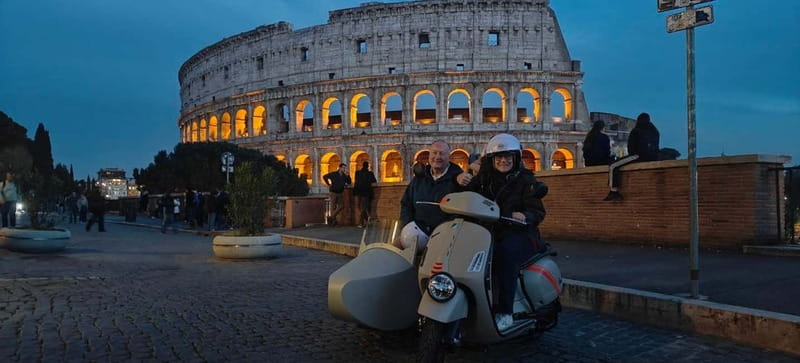
Rome is big, and walking can turn fun into a slow grind—especially in heat. This tour gives you the best kind of shortcut: you’re moving by scooter, but you’re still getting real stops at the places that anchor most first-timers’ wish lists. In practice, it’s a way to get your bearings fast while keeping your energy for dinner plans.
The “express” part matters. Instead of trying to cram everything into one long day, you get a tightly packed route that hits major icons plus two viewpoints. You’ll likely finish feeling like you saw the heart of Rome, not just the edge of it.
If you like your Rome with a little adventure—wind, speed bumps, sudden photo opportunities—this is the kind of experience that clicks immediately. And yes, it’s also a crowd-pleaser for kids and teens, who often enjoy being the ones everyone waves at on the scooters.
Meeting at Piazza del Popolo: The Best Starting Point for a Roller-Coaster Route
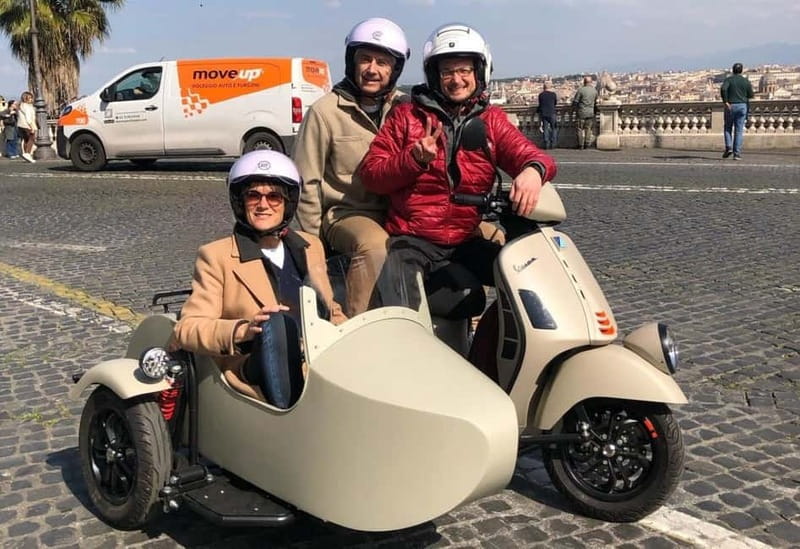
You’ll start at Piazza del Popolo, right at the spine of Rome’s historic streets. It’s one of those squares that instantly tells you you’re in the real center: three major roads meet here, and the space feels grand even before you’ve seen a single ruin. The tour is designed to begin there and loop through landmark after landmark without making you waste time on long transfers.
Bring normal city-ride sense: wear comfortable shoes for the short moments you’re standing, and keep your phone secured. You’ll be on and off the scooter for photos, and those little “freeze for the picture” moments add up.
Most importantly, take a minute to get helmet and seat instructions clear. People consistently praise the ride experience and the “we feel safe” vibe, but you still want to match the guide’s guidance to your comfort level—especially if you’re riding in the sidecar.
Piazza del Popolo and the Altar of the Fatherland Crossroads
The tour begins at Piazza del Popolo, a neoclassical showpiece that acts like Rome’s front door. You’ll have a short window—about 10 minutes—to take in the twin churches and the central obelisk view that frames the streets heading inward. Even if you don’t know the names yet, you’ll feel the geography clicking into place.
From there, you’ll move to a major crossroads dominated by the Altar of the Fatherland (the big white monument that overlooks central Rome). This is less about “spend time inside” and more about grabbing the right outward angle: you’re viewing key connections toward the Roman Forum area and the hill country around it. The value here is perspective. Rome’s landmarks become easier to understand when you see how the city links them.
One practical note: these are photo and look-around stops, not museum visits. If you want interiors, you’ll need a separate ticketed plan. The upside is you keep the schedule moving and avoid turning the day into a queue marathon.
The Colosseum Zone: Seeing the Amphitheater Without the Museum Day
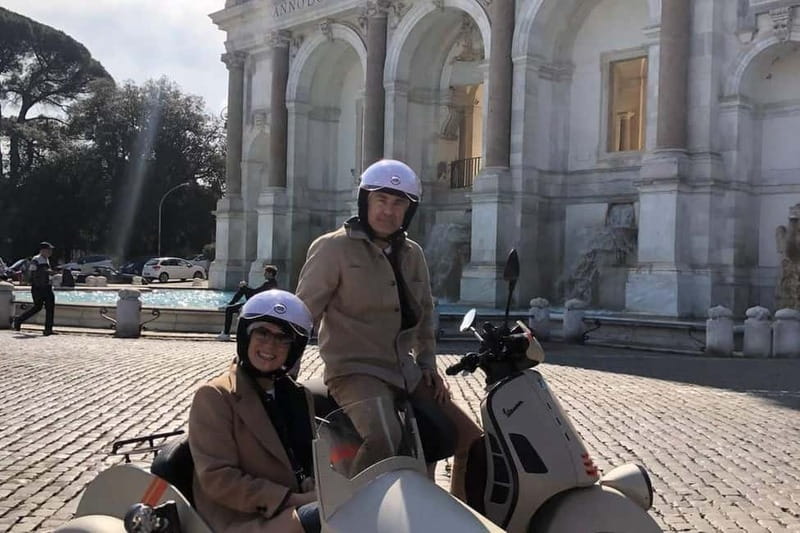
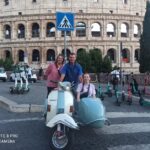
The Colosseum stop is aimed at what you actually want in a fast tour: recognizable views and the context to remember what you’re looking at. You’ll spend around 10 minutes in the area, with the key idea being that the Colosseum and the Roman Forum were the center of ancient public life. From street level and surrounding vantage points, you can “read” the city’s layout in a way you can’t always do from a single ticketed entrance.
The Colosseum itself is the headline, but the smart part of this stop is the reminder that the Forum was once the heart—full of temples, basilicas, and civic spaces. In other words, you’re getting the story without needing to spend hours inside.
Potential drawback: because this is panoramic/exterior-focused, you won’t be going into the Colosseum or the Forum. If you’re the type who needs to stand inside the structure to feel satisfied, you’ll probably want to pair this tour with a separate ticketed visit on another day.
Trevi Fountain and the Pantheon: Two Icons, Two Different Kinds of Wow
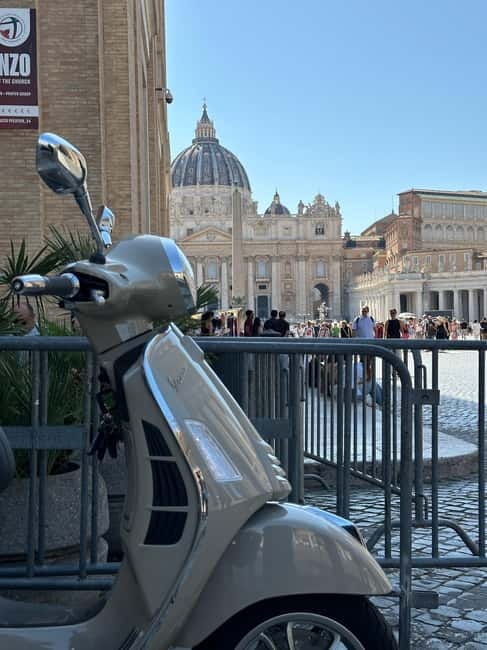
Trevi Fountain is pure theater. The tour gives you a short, focused stop—again, about 10 minutes—to see Baroque grandeur and the myth-driven sculptures that make it one of the most photographed fountains on Earth. You’ll also get that “sound in the background” effect, since flowing water is part of the experience even when you’re just taking photos.
The realistic side: Trevi is always crowded. On a scooter-based express tour, you won’t have time to fight for an ideal spot for a long photoshoot. You’ll get a chance to see it and capture your view, but treat it like a quick hit rather than an extended photo session.
Then you roll to the Pantheon, one of Rome’s best examples of how ancient engineering still holds up. The big takeaway is the dome and the oculus—nature light pouring into the space—and how well the interior preserves the sense of original design. This is another short stop, so you won’t go “deep” in the way a full guided museum visit might, but you will leave with a clearer idea of what makes the Pantheon special.
If you like structure and details, you’ll appreciate this stop. The Pantheon tends to reward attention even in a brief visit, because the building’s proportions do the storytelling for you.
St. Peter’s Square by Scooter: A Different Kind of Big
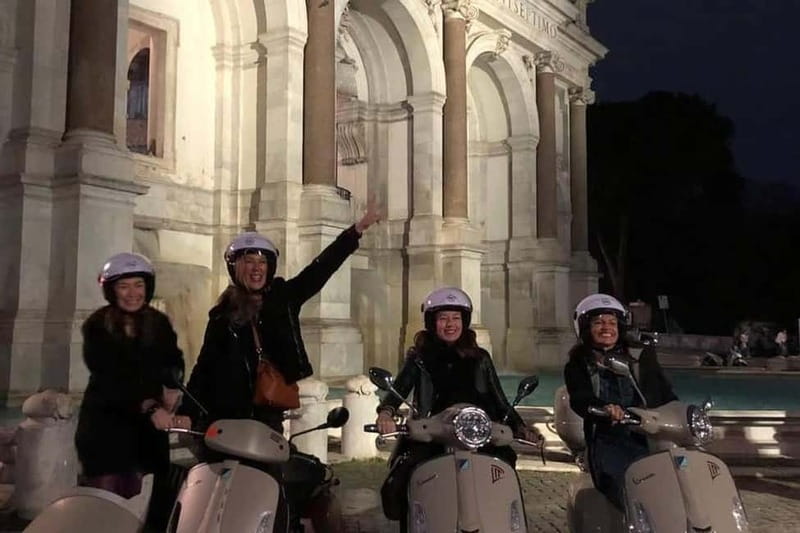
St. Peter’s Square is a powerful change of scene. You’ll view it framed by Bernini’s famous colonnade and look toward St. Peter’s Basilica from the square side. The tour stop is short—about 10 minutes—but it’s enough time to take in the scale and absorb the feel of a major spiritual center.
One thing the route highlights: this area can feel calmer than the city streets around it, especially depending on time of day. Even if you’re not a religious history deep-dive person, you’ll likely notice the shift in tone when you’re standing in that space.
And yes, night can be magical. If your schedule allows, consider timing the rest of your Rome day around evening light, then take a walk nearby after your ride. You’ll be close to a part of the city that really does change mood by the hour.
Janiculum Hill: The Panoramic Payoff
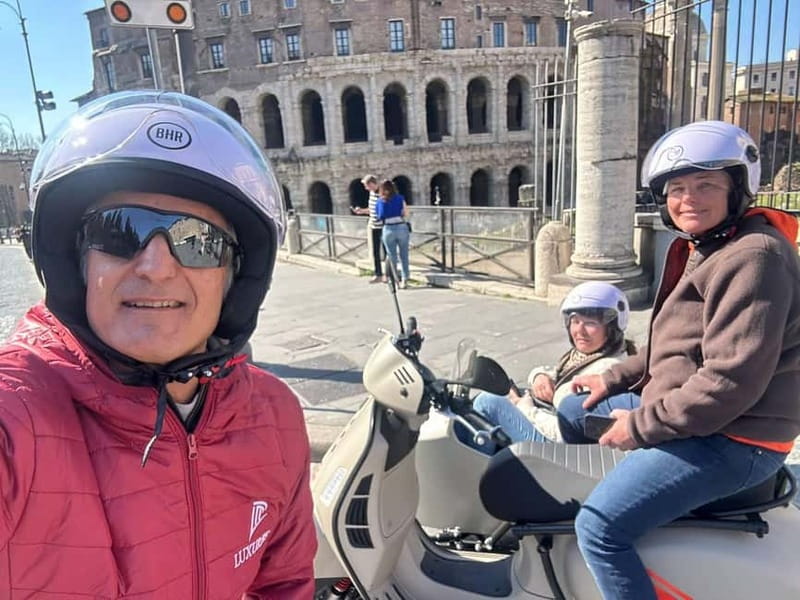
After the big landmarks, you get a breather at Colle del Gianicolo (Janiculum Hill), one of the highest points in Rome. This is where the tour earns its “wow” finish: you’re up high enough to see rooftops and domes spread across the city.
You’ll get about 10 minutes here, which is enough time to grab a view, take a few photos, and let your brain reset. People often love this stop because it feels less like a checklist item and more like a moment.
If you’re chasing sunset vibes, this is the stop to keep in mind. Even if you don’t catch sunset exactly, the evening light can still make Rome look softer and more cinematic than during midday heat.
Guides Make or Break It: Luca, Massimo, Matt, Ernesto, Fabrizio, Roberto
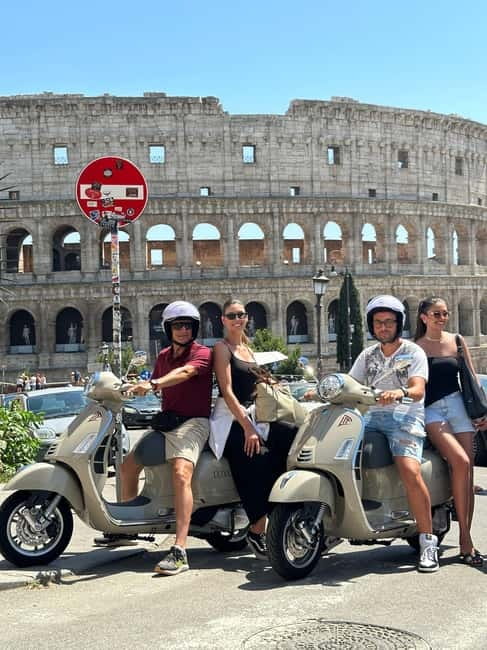
The biggest repeated praise is the guides. Several names pop up again and again—Luca, Massimo, Matt, Ernesto, Fabrizio, and Roberto—and the common thread is that they sound like people who actually live in Rome, not actors reading a script.
You’ll probably notice two things about strong guiding on a scooter tour:
1) They point out what’s worth looking at right now, not five minutes later.
2) They connect the landmark to the city around it, so the streets start to feel logical.
Many guides also handle the “picture moments” smoothly, helping you get a clean stop for photos and then getting everyone rolling again without chaos. That matters. On a scooter ride, timing is everything, and a good guide keeps the day feeling easy.
One real consideration: audio. A couple of people said it can be hard to hear the commentary. If your seat doesn’t naturally face the guide’s mic or speaker, you may miss parts of the narration. If you’re a detail listener, ask how audio works before you start, and don’t be shy about adjusting your position slightly while stopped.
Safety, Sidecar Comfort, and How Seating Usually Works
This tour is built around safe riding and provided helmets. That’s not just “nice to have.” It’s what keeps the experience fun instead of stressful, especially when you’re moving through busy streets at scooter speed.
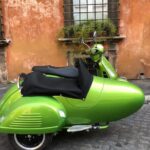
The sidecar setup is also important for expectations. The tour experience is designed so that two adults typically share one sidecar configuration—one riding in the sidecar and another riding behind the driver on the main Vespa. When there are more people in the group, you may ride behind another Vespa rather than having everyone in a sidecar at once.
That seating detail is where some disappointment can happen. If you’re traveling as a family or a small group of three adults, read the seating reality carefully and consider asking what the exact configuration will be. People who plan ahead tend to enjoy the thrill more, because they know what to expect before arriving.
If you’re bringing kids, the sidecar can be a big hit. Reviews highlight that children often feel safe and enjoy the celebrity feeling of cruising Rome’s streets.
Value: What You’re Paying For at Around $60
At about $60.33 per person for roughly 90 minutes, the value is less about “admission tickets” and more about paid guiding + transportation + safety gear. You’re not buying a museum visit. You’re buying a fast, guided, scooter-based way to see Rome’s big hitters with photo stops built in.
That’s why the tour works best when your goal is orientation. If you’re trying to see Rome in a short window—first-time visit, tight schedule, or you’re saving your feet for later—this can be a very efficient use of time.
If your goal is deep interior experiences, you’ll still need ticketed visits separately. Trevi and the Pantheon stops are built as exterior/panoramic moments (no interior admission included), so think of this as the “best of the skyline” plan paired with other activities.
Making the Most of the Route on Your Day
This express format is perfect when you plan the rest of your Rome day around it. I’d treat it like a foundation: do this early or mid-trip so the landmarks you see later feel connected.
After the tour, you’ll likely want to pick one or two stops to revisit on foot. St. Peter’s area, the Pantheon zone, and viewpoints like Janiculum are all natural candidates for a second look with more time.
Also, pack for street-level reality. You’ll be outdoors, moving, and stopping briefly. A light layer helps because scooter rides can feel cooler once you hit open air, even on a warm day.
Finally, keep your expectations aligned with the pace. The tour is designed for “see, understand, photograph, and move.” If you try to turn it into a slow wandering day, you’ll feel rushed. If you let it do what it’s built to do, it’s a great day highlight.
Should You Book This Vespa Sidecar Tour?
I think you should book it if you want a fun, time-efficient way to cover Rome’s biggest landmarks with a real guide and a classic scooter ride. The live commentary, the guided photo stops, and the strong local-style storytelling (with guides like Luca, Massimo, Matt, Ernesto, Fabrizio, and Roberto) are the heart of the experience.
Skip it or book with caution if your top priority is museum-style interiors, long lingering time, or you’re traveling with a group where sidecar seating needs to be guaranteed for everyone. Also consider the audio concern—if you know you struggle with overhearing commentary, ask how audio will work before you ride.
If you’re flexible, enjoy a bit of thrill, and want Rome to feel less like homework and more like a movie set you’re riding through, this express Vespa sidecar tour is a smart choice.