REVIEW · BEIJING
Beijing: 4 hours Discover City by Sidecar
Book on GetYourGuide →Operated by Beijing Sidecar Tour · Bookable on GetYourGuide
Sidecar rides make Beijing feel close fast. In just four hours you get private guide attention and real hutong alley time, not a rushed bus stop. The main catch is that it’s a tight loop with frequent short stops, so it’s not meant for long, slow sightseeing binges.
I like that the tour is built around classic Beijing landmarks and local daily streets, all while you glide through the city on a sidecar setup. Expect photo breaks, a few temple-and-alley pauses to actually look around, and snack time with coffee or tea. If you hate being on a motorbike-style ride, this may not be your thing.
In This Review
- Key things to know before you go
- Riding Beijing’s old axis, hutongs, and wall remains in 4 hours
- Hotel pickup inside the 4th Ring Road (and a clean, easy start)
- Drum & Bell Towers: the big landmark stop that sets the tone
- Houhai’s waterside feel: a calm break from the road
- Hutong alleyways: where the local living area part actually lands
- Yongdingmen and the snack + tea or coffee break
- A quick viewpoint stop for roof angles and photo timing
- Miaoying Temple: a temple stop that feels different from the big-ticket sights
- Niujie Street: pass-by snapshots with a different neighborhood character
- Ming City Wall Ruins Park: the older city wall memory that still shows
- The snack, the pacing, and how to get the best photos
- Sidecar logistics: seating that works for pairs and small groups
- Price and value: why $129 can make sense here
- Who should book the Beijing sidecar tour
- Should you book this Beijing Sidecar Tour?
- FAQ
- How long is the Beijing sidecar tour?
- How much does it cost per person?
- Is the tour private?
- Where does pickup happen?
- What languages are offered?
- What happens if I want to be dropped off somewhere else?
- What’s included with the tour besides the guide?
- What food and drinks are included?
- How does seating work in the sidecar?
- Who is the tour not suitable for?
- Is cancellation free?
- Is there a pay later option?
Key things to know before you go
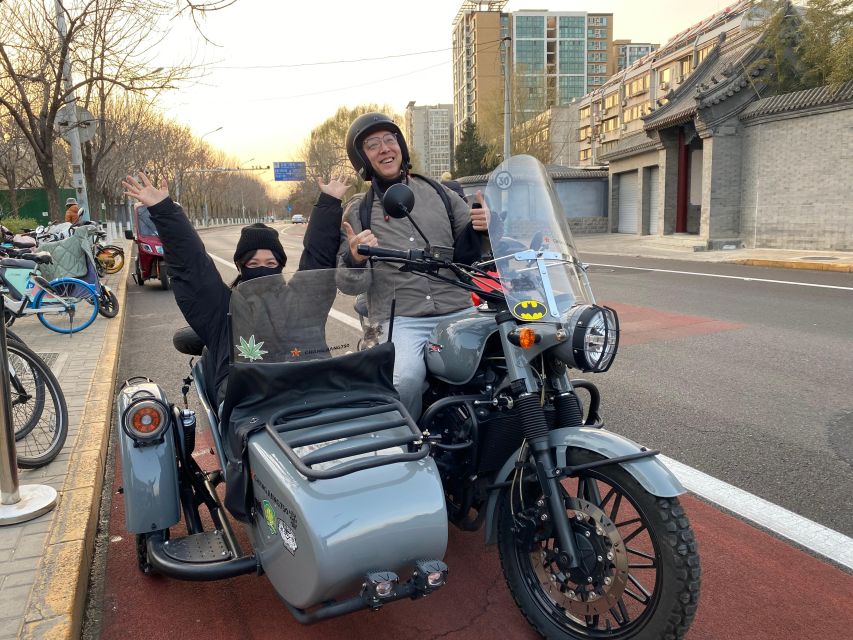
- Private door-to-door pickup from hotels inside the 4th Ring Road
- Guide communication by helmet radio, including English support from John
- Hutong alley riding so you feel how people actually move through Beijing
- Temple and landmark stops like Miaoying Temple and the Ming City Wall ruins
- Food and drink included, with hot coffee/tea in winter and cold soda/beer in summer
- Lots of photo opportunities without turning the whole day into a camera sprint
Riding Beijing’s old axis, hutongs, and wall remains in 4 hours
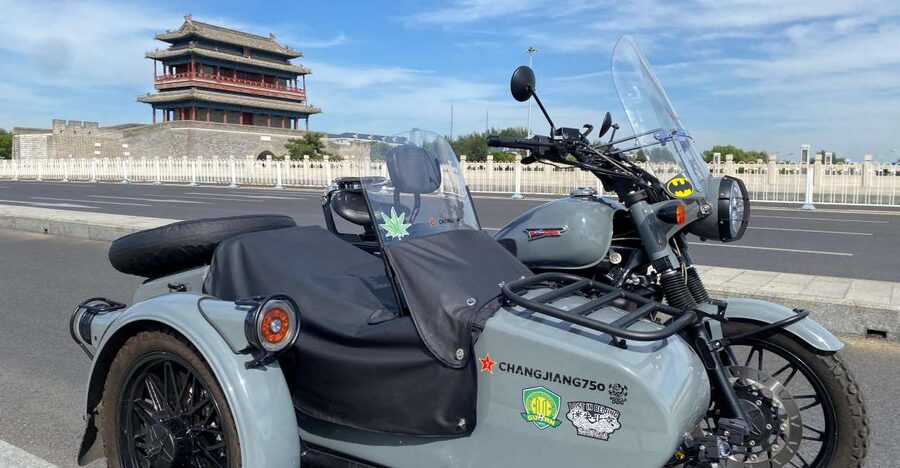
This tour works because it’s designed for a first impression, but it doesn’t stay on the main tourist shortcuts. You start in central Beijing and move along the old ceremonial axis, then peel off into smaller alleyways where the city feels more personal. In four hours, you get a quick map of how Beijing’s major layers connect: grand city planning up north, lived-in hutongs in the middle, and older wall history toward the end.
The sidecar is also the secret sauce. You’re not walking every step, and you’re not stuck in traffic the way you’d be in a car. You’ll still slow down for photo moments, but you’ll cover ground in a way that feels like Beijing is moving with you rather than waiting for you.
You should also know the pace is “stop-and-look.” There are multiple brief photo and sightseeing pauses, plus a few moments where you can step into temple or alley areas. If you’re the type who wants one museum at length, you’ll need to add a separate visit later.
Hotel pickup inside the 4th Ring Road (and a clean, easy start)
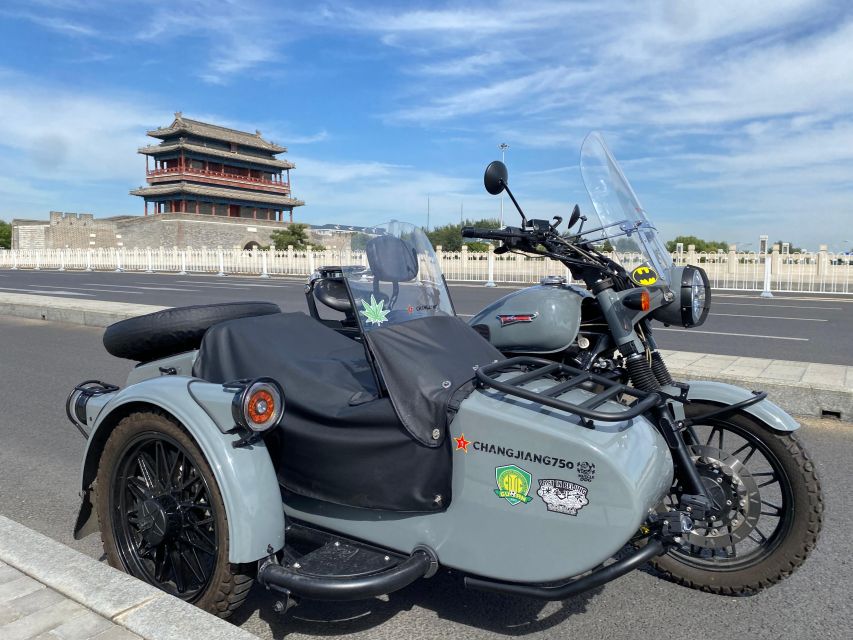
This experience starts right at your hotel, which matters in Beijing. You don’t have to figure out transit, street finding, or where the meeting point is. Pickup is available for hotels inside the 4th Ring Road, so you’re set up for a smooth beginning.
Once you’re matched with the sidecar setup, you’ll get helmets and practical extras like bottled water and a phone charging cable. Raincoat is provided too, which is a small thing until you’re suddenly wearing your day instead of the weather.
One more detail I really like: the connection with the guide isn’t just a random shout across moving traffic. Your helmet communication uses a system that lets you hear the guide clearly while you ride, so you can actually pay attention to what you’re passing.
Drum & Bell Towers: the big landmark stop that sets the tone
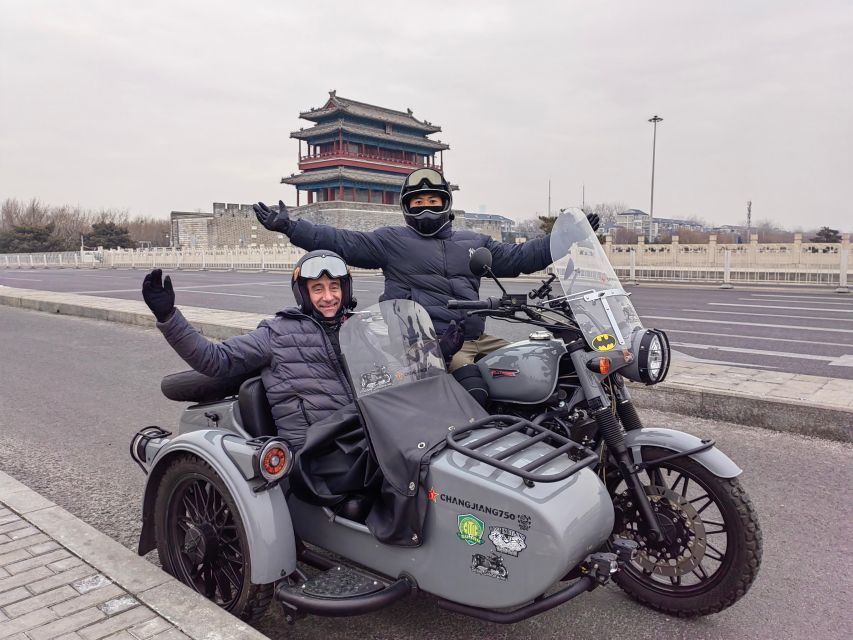
The ride begins with Drum & Bell Towers. You get a photo stop and time to look around, about 40 minutes. This is one of those moments that helps you orient yourself fast. You see a symbol of old timekeeping and city order, and you start to understand why Beijing’s “axis” matters in the first place.
What you’ll likely appreciate most here is the visual scale. These aren’t tiny corners; they’re major pieces of the city’s historical layout. Even if you’re not a facts person, the towers give you a mental anchor for the rest of the route.
The drawback? This is an early stop with a lot of attention on photos, so if you’re hoping for slow, quiet wandering, you’ll want to keep your expectations realistic. Still, it’s a smart opening.
Houhai’s waterside feel: a calm break from the road
After the towers, the tour passes Houhai. The time is brief, around 20 minutes, but Houhai’s appeal is that it gives your brain a reset. You’re shifting from grand structures and axis energy to a more relaxed part of central Beijing.
This is the kind of stop where you’ll notice the difference between a planned landmark and a lived-in neighborhood edge. Even during a pass-by segment, the area’s waterfront vibe changes the mood of the day.
If you’re sensitive to crowds or street bustle, keep in mind this is still a central zone. The benefit is that you’re not stuck there for hours—you get the flavor and move on.
Hutong alleyways: where the local living area part actually lands
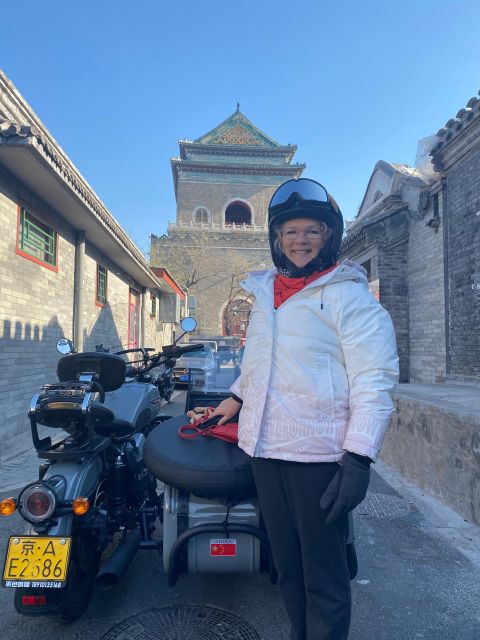
Then comes the heart of the experience: riding into the smaller hutong alleyways. This is where you start to feel how people experience Beijing day to day. Instead of only seeing walls and towers, you’re seeing the street geometry close-up—narrow lanes, tight turns, and the sense that the city is built for walking and local rhythms.
The value here is perspective. Beijing can feel overwhelming if you only visit major sights. But when you glide into hutong lanes, you understand the texture of the city. You see how neighborhoods connect to the larger landmarks around them.
A practical note: hutongs can mean uneven road surfaces and tighter space. You’re on a sidecar, so you don’t need to walk every meter, but you do feel the ride. If you’re prone to motion discomfort, mention it to your guide at pickup so they can advise.
Yongdingmen and the snack + tea or coffee break
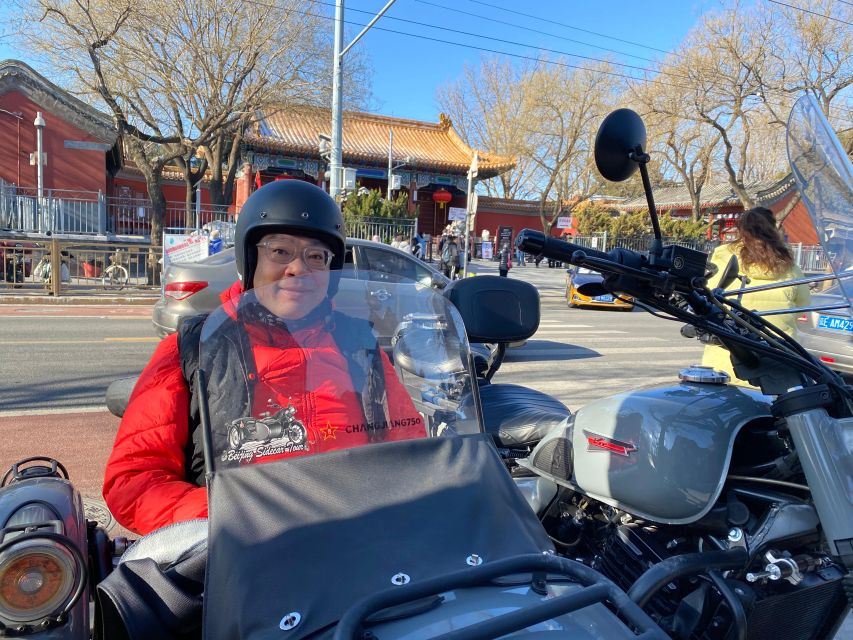
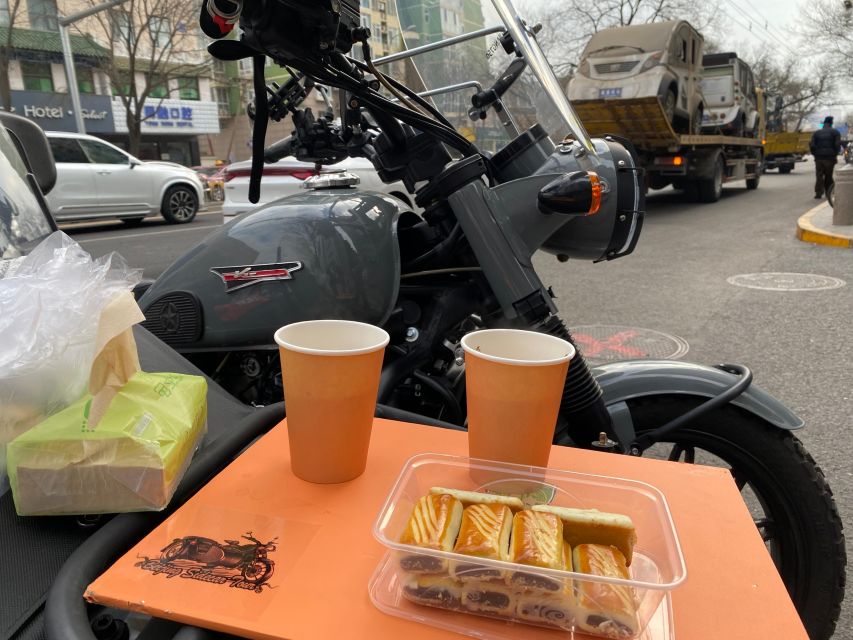
Next is Yongdingmen, and this is one of the most useful parts of the tour. You get a 30-minute break that includes coffee, tea, and food tasting. This isn’t a random sugar stop; it’s a chance to slow down and refuel while still staying in the story of the day.
Yongdingmen sits along the south point of the central axis area, so the context matters. You’re moving from the earlier landmark rhythm into the part of the city tied to old city wall presence.
The snack element is also a big deal for first-time visitors. If you only eat when you find restaurants, you miss what local streets taste like. Here, local snacks are included, and you also get hot coffee/tea in winter or cold soda/beer in summer. That seasonal touch means the break feels tuned to the weather rather than stuck in a generic “anytime” routine.
A quick viewpoint stop for roof angles and photo timing
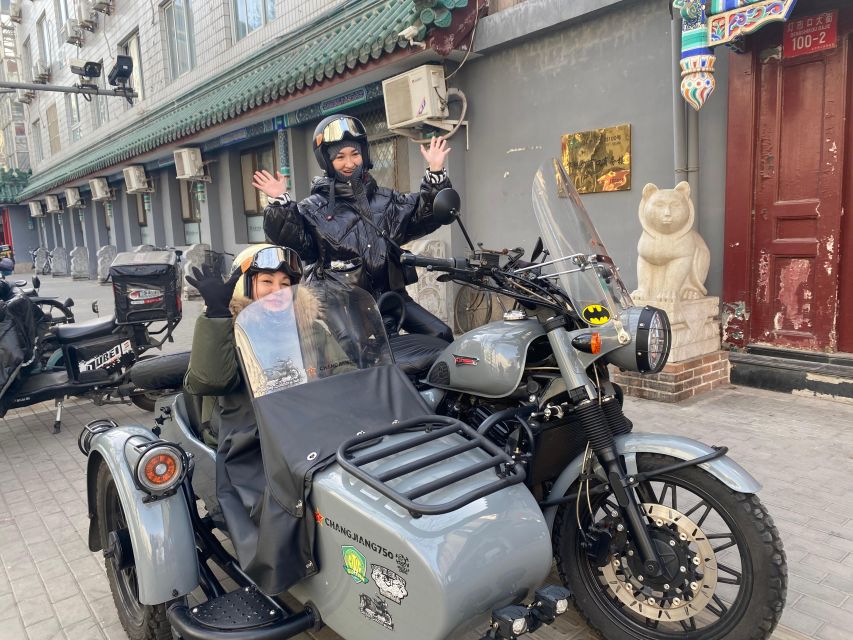
Between temple stops and the final wall ruins, you’ll hit a 15-minute viewpoint photo stop. The purpose is simple: you get a slightly elevated angle so the city isn’t only framed at street level.
This is the kind of stop that can make or break your photos. Beijing’s rooflines and lane patterns look very different depending on where you stand. With only 15 minutes, you’ll want to be ready with your camera/phone and keep moving when it’s time to go.
Miaoying Temple: a temple stop that feels different from the big-ticket sights
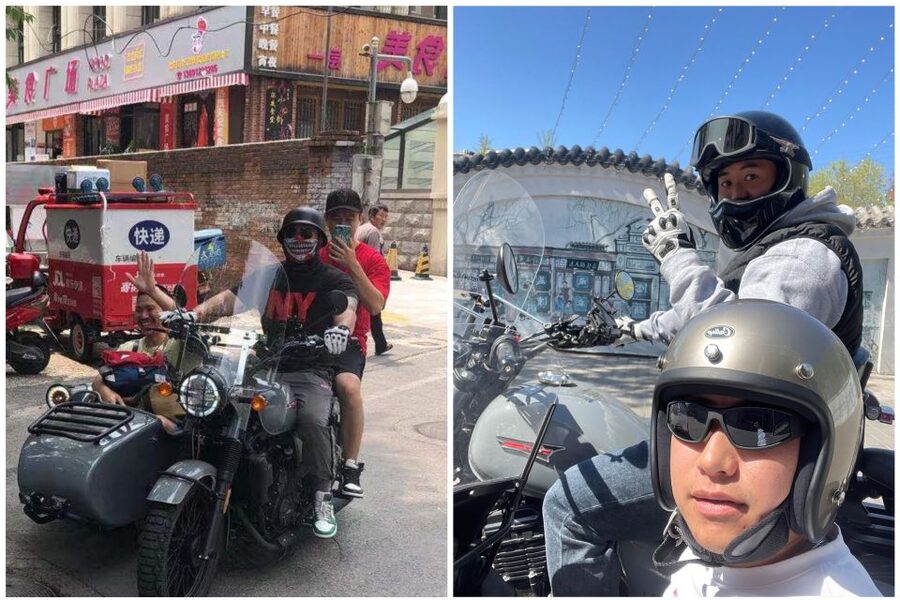
Then you’ll see Miaoying Temple, with a short 10-minute photo stop. It’s not a long visit, so don’t treat it like a substitute for an independent temple walk. But it’s still valuable because it gives you a glimpse of a quieter religious corner within a tight city loop.
What makes this sort of stop worth it is variety. You get the “big landmarks” feel earlier, and then Miaoying Temple adds a different tone—more intimate, more about atmosphere than scale. Even with limited time, you can usually capture roof details and the general layout.
The tradeoff is that a quick stop means you won’t have time to read every sign or get deeply into architectural details. But as a first-pass introduction, it does its job.
Niujie Street: pass-by snapshots with a different neighborhood character
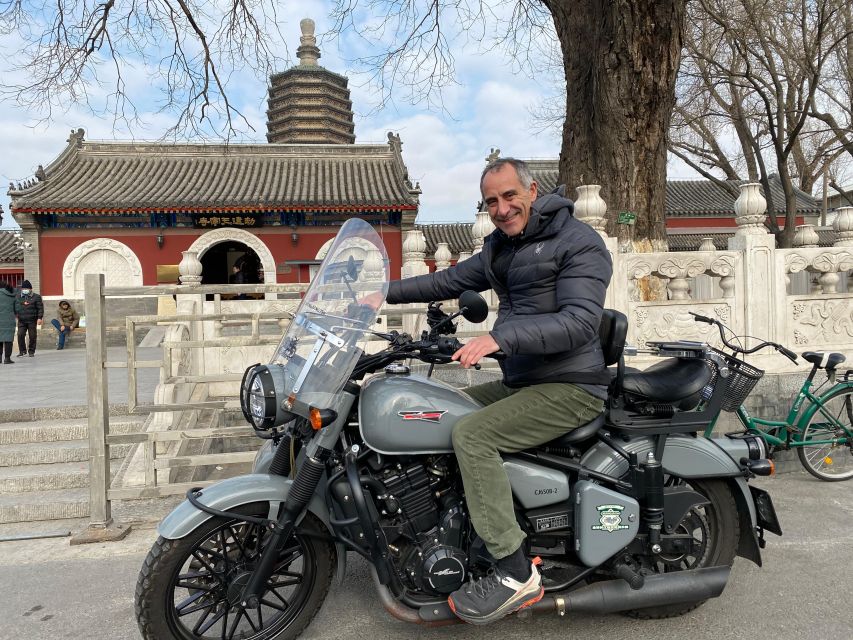
From Miaoying Temple you move toward Niujie Street for a photo stop and pass-by. Time is not stated as a long hold, so treat it as a “look from the side, grab the angle, keep rolling” moment.
Niujie Street’s value inside this specific tour is contrast. After temples and the feel of the axis, you get street-level rhythm again. It’s a reminder that Beijing isn’t only historic monuments; it’s everyday commerce and neighborhoods moving together.
Ming City Wall Ruins Park: the older city wall memory that still shows
The last major sightseeing segment is Ming City Wall Ruin Park, with about 20 minutes of sightseeing and photo time. This is one of those Beijing details that matters for understanding the city’s shape. You’re visiting the only remaining section of the old city wall, so it’s history you can literally see in place.
Even if you’ve read about Beijing’s wall before, seeing the preserved portion helps your brain connect the dots. The city wall isn’t just a story—it’s a physical boundary that once organized life around it.
The drawback is time. Twenty minutes means you’ll likely focus on the most photogenic spots and a quick walk around. For deeper wall studies, plan a separate longer visit later.
The snack, the pacing, and how to get the best photos
This tour is photo-friendly, but it doesn’t linger excessively. You’ll have lots of stops for photos, and you’ll walk into a few alleys and temple areas to chill, not just speed past everything.
Here’s how to make those moments pay off:
- Keep your phone charged; the tour provides a cable, but you’ll still want to use power wisely.
- Think “angles,” not “everything.” In 4 hours, you’ll get more satisfaction choosing a few standout shots per stop.
- Dress for real street conditions. You’ll get rain protection, but you’ll still be outside during the ride and photo breaks.
You’ll also get bottled water, which sounds basic until you realize how often short walking tours skip it. Here, you’re set.
Sidecar logistics: seating that works for pairs and small groups
The sidecar setup is flexible by group size:
- For 1–2 passengers: one in the sidecar and one behind the driver, with the option to switch halfway.
- For 3–4 passengers: two sidecars.
- For 5–6 passengers and up: additional sidecars in the same logic.
This matters because it affects comfort and fairness. If you’re riding with someone, the ability to switch halfway is a nice touch. It keeps the experience from feeling lopsided for one person.
Also, communication uses that helmet-integrated radio system, so you’re not guessing when to stop or where to look next. The ride stays guided, not chaotic.
Price and value: why $129 can make sense here
At $129 per person, the price isn’t “budget,” but it also isn’t just paying for transportation. You’re paying for a 100% private experience with a professional driver and guide, plus included items that cut down on your own planning: helmets, raincoat, bottled water, hot or cold drinks depending on the season, and local snack tasting.
Where this feels like good value is the combination:
- You get access to classic sights like Drum & Bell Towers and Ming City Wall Ruins.
- You also get hutong riding that’s usually harder to arrange with public transit.
- You get food and coffee/tea included, which helps you avoid turning the tour into a hunt for lunch.
If you want Beijing highlights but also want a different perspective beyond the usual walking routes, the price feels more justified than a cheap group tour that gives you less personalization.
Who should book the Beijing sidecar tour
This is a smart choice if you:
- Want a first impression of central Beijing with a local-living feel
- Like photo-heavy city exploring without spending all day walking
- Prefer a private guide who can explain what you’re seeing in real time (and in English when needed)
- Appreciate snack and drink breaks built into the route
It may be less suitable if you:
- Need long, slow visits in one place
- Don’t enjoy motorbike-style riding or feel uncomfortable in that setting
There are also clear limits: children under 6, babies under 1, pregnant women, and people over 80 are not suitable for this activity.
Should you book this Beijing Sidecar Tour?
I think you should book it if you want Beijing’s “big landmarks plus real streets” combo in one clean 4-hour block. The private format, hutong time, and included snack stop make it more than a sightseeing drive. If you’re the type who likes getting oriented fast—then using the rest of your trip for deeper, separate visits—this is a great way to start.
If you dislike frequent short stops, or if sidecar riding sounds like a hassle rather than fun, you might prefer a traditional walking tour instead. But for most people wanting energy, variety, and local flavor in a compact schedule, this one is a strong match.
FAQ
How long is the Beijing sidecar tour?
The tour duration is 4 hours.
How much does it cost per person?
The price is $129 per person.
Is the tour private?
Yes. It’s a private group tour with a professional driver and guide.
Where does pickup happen?
Pickup is included at hotels inside the 4th Ring Road. You share your hotel name so they can arrange pickup.
What languages are offered?
The live guide speaks Chinese and English.
What happens if I want to be dropped off somewhere else?
You can be dropped off at your hotel, or you can ask to be taken to somewhere you want to go.
What’s included with the tour besides the guide?
Helmets, bottled water, a raincoat, and a phone charge cable are included, plus local snacks and seasonal drinks.
What food and drinks are included?
You’ll get Beijing local snacks and hot coffee or tea in winter, or cold soda or beer in summer.
How does seating work in the sidecar?
For 1–2 passengers, one person rides in the sidecar and one behind the driver, with the option to switch halfway. For 3–4 passengers, two sidecars are used, and for larger groups more sidecars are added accordingly.
Who is the tour not suitable for?
It’s not suitable for children under 6, babies under 1, pregnant women, and people over 80.
Is cancellation free?
Free cancellation is available up to 24 hours in advance for a full refund.
Is there a pay later option?
Yes, you can reserve now and pay later.