
REVIEW · TOURS
Half day tour on sidecar from Tours
Book on Viator →Operated by RETRO TOUR CHÂTEAUX DE LA LOIRE · Bookable on Viator
Loire Valley is gorgeous, but this makes it weird in a good way. A half-day vintage sidecar ride gives you that out-in-the-open feeling while your gentleman sider points out the best stops between Tours and Azay-le-Rideau along the water. What I like most is the close-up, comfortable pace for visiting châteaux and gardens, plus the personal attention of a private group of up to 2. The main thing to think about is cost: it’s priced per group, so it makes more sense if you’re traveling as a couple or small party.
You start with a simple plan and a very human experience: one vehicle, one guide, and a focused route. It’s not just transportation. You’re basically getting a guided “route story,” turning the drive into part of the itinerary.
The ride ends back where you begin, so you’re not hunting down a new drop-off point later. That’s helpful, especially if you want to carry on with dinner or an evening stroll in Tours.
In This Review
- Key things that make this sidecar tour worth your time
- Why this vintage sidecar route works so well in Touraine
- Price and value: what $465.43 per group really buys you
- Meeting in Tours: getting started without stress
- Tours first stop: art-and-history orientation from street level
- Villandry gardens: a Renaissance castle built for three-level beauty
- Château de Langeais: fortress walls and a princely residence inside
- Azay-le-Rideau: white stone, an Italian-style staircase, and l’Islette
- What the 4-hour flow feels like (and how to plan your day)
- The guide factor: what you’re paying for beyond the sidecar
- Who should book this sidecar tour (and who should skip it)
- Should you book RETRO TOUR CHÂTEAUX DE LA LOIRE?
- FAQ
- How long is the sidecar tour from Tours?
- How much does the tour cost?
- Is this a private tour?
- Where do I meet the guide?
- Where does the tour end?
- What are the main stops on the route?
- Do I get a mobile ticket?
- Are service animals allowed?
- Can most people participate?
- What is the cancellation policy?
Key things that make this sidecar tour worth your time
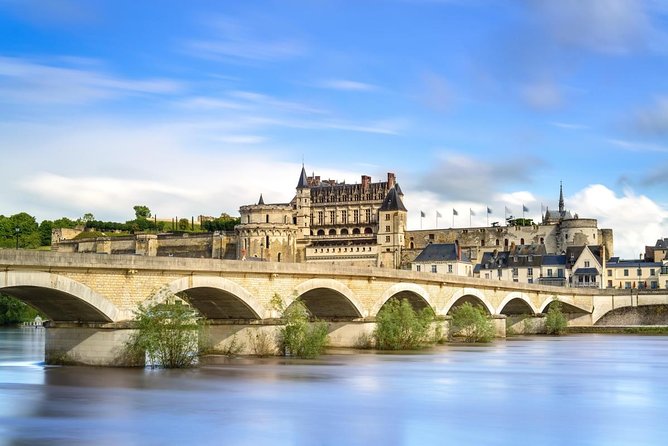
- Vintage sidecar comfort for a truly different way to cover the Loire Valley route
- Private tour for up to 2 so the guide can set the rhythm for you
- Villandry’s three-level Renaissance gardens, the kind you can actually appreciate without rushing
- Château de Langeais details that connect the fortress look with princely life
- Azay-le-Rideau’s white-stone elegance, plus a park created from 1810
- A route focused along the water between Tours and Azay-le-Rideau, not a scattered checklist
Why this vintage sidecar route works so well in Touraine
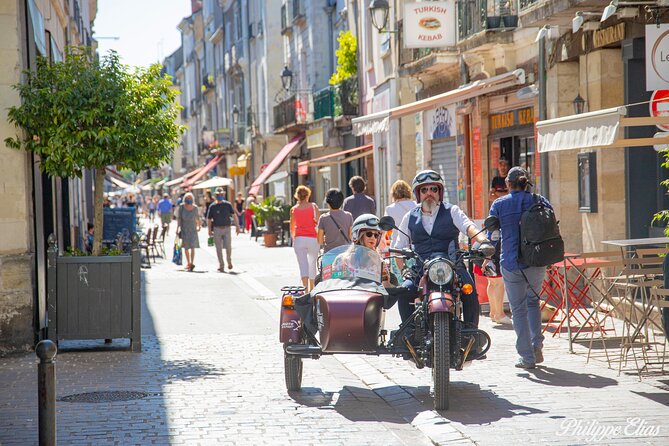
A sidecar tour changes how you see the Loire Valley. Instead of moving between places on autopilot, you feel the geography: how towns sit, how the river route shapes the day, and how the châteaux look when you approach them from the road.
I also like that the experience stays practical. The total time is about 4 hours, which is long enough to cover multiple “big name” stops, but short enough that you still have energy afterward. And because it’s a private setup for up to 2 people, you’re not squeezed into a crowd or forced to match someone else’s pace.
One more small but real win: you’re not just getting dropped at attractions. Your gentleman sider helps you discover the must-see places between Tours and Azay-le-Rideau, which means you’re more likely to notice details you’d skip on your own.
Price and value: what $465.43 per group really buys you
The price is $465.43 per group (up to 2). On paper, that’s not cheap, especially if you’re comparing to bus tours or self-guided options.
But the value comes from three things that add up fast:
- Private guide time for you only
- Sidecar transport that turns the drive into a “moving viewpoint”
- Multiple high-impact stops in one half-day
If you’re two people splitting the cost, it becomes much easier to justify. If you’re solo, it may still be worth it for the novelty and the one-to-one attention, but you’ll want to be sure you really want the sidecar experience (not just the châteaux).
Also, for couples, this is the kind of day that feels like an outing, not an errand. And that matters with Loire Valley, because it’s a place you want to savor.
Meeting in Tours: getting started without stress
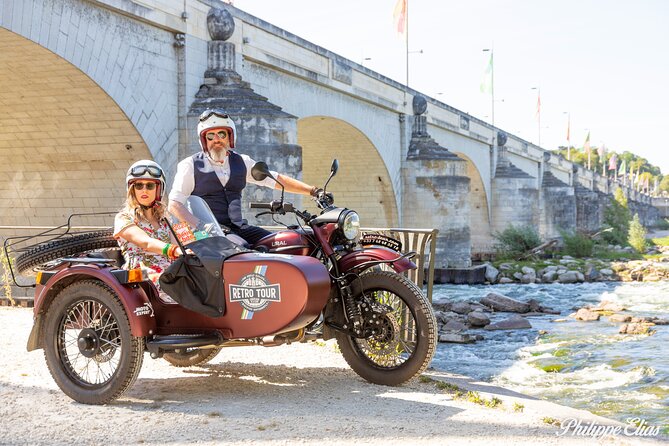
You meet at the Tourist Office Tours Loire Valley, 78 Rue Bernard Palissy, 37000 Tours. That’s convenient because you’re starting in a central, easy-to-find area rather than a random roadside pull-off.
From there, the tour follows a loop that ends back at the meeting point. So you avoid the common headache of figuring out transport from a different town later. For planning, that’s big.
The day is built around comfortable movement and short, focused visits. If you like structured sightseeing but still want it to feel personal, this format fits well.
Tours first stop: art-and-history orientation from street level
Your first stop is Tours itself. This is introduced as a city of art and history, with unusual places that your gentleman siders are happy to show you, seated comfortably in the vintage sidecar.
Why this works as a start: you get orientation fast. Instead of arriving already tired and trying to map the city in your head, you begin with the guide’s take on what’s worth your attention.
It also helps that Tours is the anchor point for the Loire Valley route. By the time you move on toward the other châteaux, you’ll understand what you’re looking at and why it matters in the broader story of the region.
If you’re the type who enjoys quick local context—small details, street scenes, and “how this place got its reputation”—Tours as the first stop sets the tone nicely.
Villandry gardens: a Renaissance castle built for three-level beauty

Next up is Villandry, described as a Renaissance castle with tiered gardens across three levels. It’s noted as the last of the great Renaissance castles built on the banks of the Loire.
The garden layout is the headline here, and you should plan to slow down for it. Three levels means you can get variety in sightlines without moving your whole body across a huge area. You’re also going to see how the harmony of architecture and planting is part of the design, not decoration after the fact.
Villandry’s gardens are known for combining aesthetics, diversity, and harmony. Even if you’re not a plant nerd, that phrase translates to one thing you can feel: the place looks intentional. You’re likely to take your time moving between terraces to see how views change from one level to the next.
One consideration: gardens are best when you can enjoy walking paths and standing to look. If you prefer indoor-only stops, you may find this is the most outdoors-focused part of the route.
Château de Langeais: fortress walls and a princely residence inside
Then you move to Château de Langeais, which is presented as both a fortress and a princely residence. That mix is exactly why it’s interesting: you’re not looking at one uniform “fairytale” style. You’re seeing how defensive needs and elite living could exist in the same place.
Inside the experience, the details matter. The description highlights sculpted furniture, rich hangings, and objects of art that recall the life of the great lords. There’s also a reconstruction of the secret marriage of Charles VIII and Anne of Brittany—an event tied to how the duchy attached to the crown of France.
For medieval-history lovers, the château also has remains of the oldest stone keep located in the heart of the park. That gives you a physical connection to the early fortification side of the story, not just the palace layer.
A practical way to approach this stop: don’t try to “speed-run” the whole place. Langeais works best when you pick a few details—armorial-looking touches, furniture-style elements, and the keep setting—and let those anchor your visit.
Azay-le-Rideau: white stone, an Italian-style staircase, and l’Islette
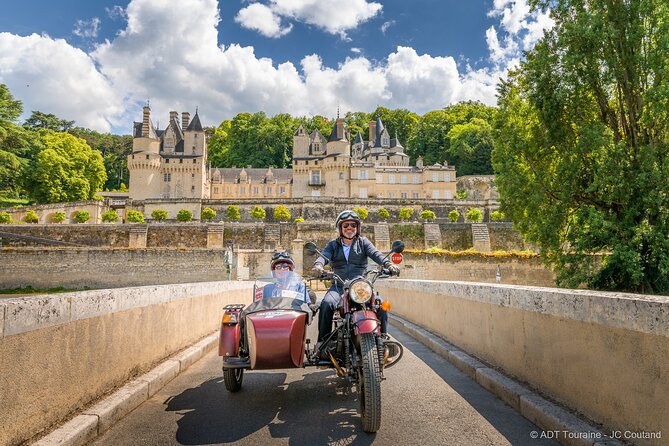
The final major stop is Château de Azay-le-Rideau, built in 1527 and described as a marvel of grace and whiteness. It’s dominated by turrets that still echo the medieval era, which is a nice contrast to the Renaissance reputation.
You’re also told the château is built partially on the Indre river. That gives it that visual “floating” impression you often associate with Loire Valley châteaux, even before you get into rooms.
The standout detail called out here is one of the first staircases with a straight banister—Italian style. There’s also mention of decor and furniture of great richness, along with exceptional-quality tapestries from the 16th and 17th centuries. If you care about interior craft—materials, textiles, and how rooms were furnished—this is the stop that tends to reward that interest.
Then there’s the park: around the building, an 8 hectare English-style park was created from 1810. That means you can expect a more landscaped, meandering setting rather than only formal garden geometry.
And if you like literary or artistic connections, Azay-le-Rideau is also tied to Château de l’Islette, connected with the loves of Camille Claudel and Rodin. That gives the day an emotional angle beyond architecture.
What the 4-hour flow feels like (and how to plan your day)
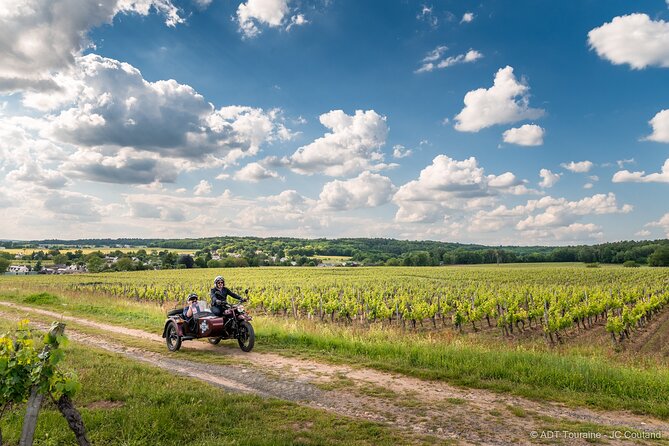
This is a half-day tour of about 4 hours, moving through four key segments: Tours, Villandry, Château de Langeais, and Azay-le-Rideau. The rhythm matters because these places aren’t small. You’ll spend enough time to understand the character of each one, but it still stays within a tight schedule.
To make the most of the day:
- Wear shoes you can walk in comfortably (especially for the gardens).
- Bring a light layer for outdoor time, because weather along the water can shift.
- If you’re planning a dinner afterward in Tours, keep reservations flexible for the evening, since you’ll be returning to the meeting point at tour end.
Because the itinerary is compact, you also get a nice payoff: you leave with a storyline. Tours sets the stage, Villandry shows the refined Renaissance garden idea, Langeais adds political and fortress context, and Azay-le-Rideau wraps it up with white-stone elegance and park time.
The guide factor: what you’re paying for beyond the sidecar
The sidecar is the headline, but the guide is the engine. Your gentleman sider isn’t just driving; they’re helping you discover the must-see places along the route.
One of the strongest signals from past guests is how smoothly guides handle the experience and how enjoyable the interaction is. For example, the guide Fred is specifically praised for making the time special and for being very accommodating about departure and arrival. That kind of practical friendliness matters when you’re spending hours with a single vehicle and a timed route.
You can think of it like this: transport takes you places. A good sidecar guide makes you notice why those places are worth your attention.
Who should book this sidecar tour (and who should skip it)
This works best if you want:
- A romantic or special-occasion style day (couples fit the “up to 2” group size perfectly).
- A break from bus tours that can feel rushed and anonymous.
- Loire Valley highlights in a tight, focused time window.
Skip it if you:
- Want an all-day museum-and-stroll pace with long independent wandering at every stop.
- Prefer going completely at your own speed without a guide shaping the visit.
If you’re on the fence, this is the kind of tour that’s most satisfying when you care about the combination: the castles and gardens, plus the unusual way you travel between them.
Should you book RETRO TOUR CHÂTEAUX DE LA LOIRE?
I’d book this if you’re coming to Tours for the Loire châteaux and you want a half-day that feels like an experience, not a checklist. The private sidecar format for up to 2 people is the big differentiator, and the stop choices line up well: Villandry for gardens, Langeais for fortress-meets-prince details, and Azay-le-Rideau for that white-stone elegance plus park time and the l’Islette connection.
I’d reconsider if you’re traveling solo and price per group doesn’t feel comfortable, or if you prefer independent travel where you can linger for hours in one place. With that said, as a targeted taste of the Loire Valley, it’s a strong pick.
FAQ
How long is the sidecar tour from Tours?
It lasts about 4 hours.
How much does the tour cost?
The price is $465.43 per group, for up to 2 people.
Is this a private tour?
Yes. It’s private, and only your group participates.
Where do I meet the guide?
You meet at the Tourist Office Tours Loire Valley, 78 Rue Bernard Palissy, 37000 Tours, France.
Where does the tour end?
It ends back at the meeting point.
What are the main stops on the route?
The tour includes Tours, Villandry, Château de Langeais, and Château d’Azay-le-Rideau.
Do I get a mobile ticket?
Yes, it includes a mobile ticket.
Are service animals allowed?
Yes, service animals are allowed.
Can most people participate?
Most travelers can participate.
What is the cancellation policy?
You can cancel for a full refund up to 24 hours in advance of the experience start time.